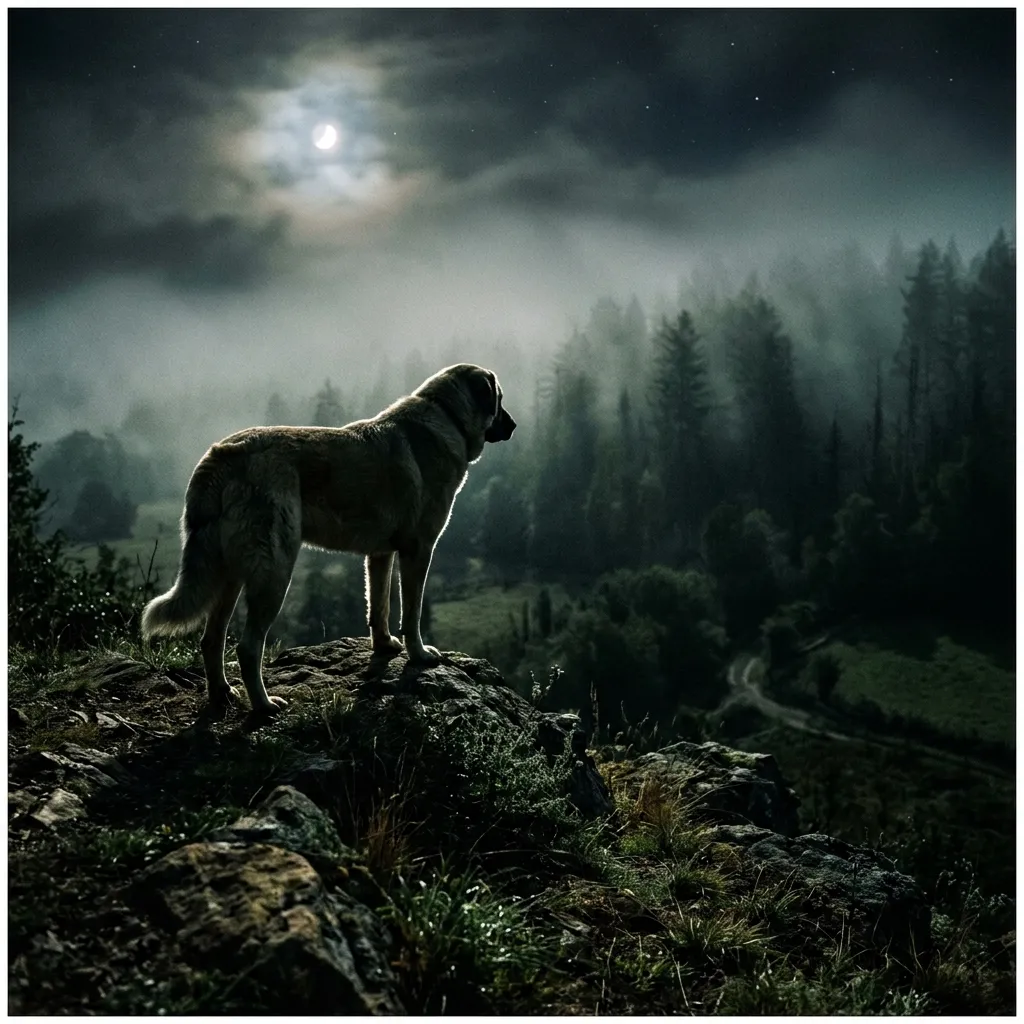
The Deterrence Model
The most effective livestock guardian dogs rarely engage in physical confrontation with predators. Instead, they work through a system of deterrence:
- Presence: The mere existence of a large, alert dog discourages many predators from approaching
- Scent marking: LGDs establish territory through urine and scent, signaling to predators that the area is defended
- Vocalization: Barking warns both predators to stay away and alerts livestock and humans
- Patrol behavior: Regular movement through territory reinforces boundaries
- Posturing: When confronted, LGDs use body language to appear larger and more threatening
Most predators prefer easy meals. When faced with a defended territory and potential confrontation, many will seek easier targets elsewhere. This is the goal: making your property not worth the risk.
Realistic Expectations
It's important to understand what LGDs can and cannot do:
LGDs may reduce losses from many common predators when properly raised and deployed. Research has shown that farms with LGDs often experience fewer predation events than those without guardian dogs.
LGDs are not invincible. They can be injured, outmaneuvered, or overwhelmed. They are part of a defense system, not a replacement for good husbandry and appropriate fencing.
Results vary. Some dogs develop strong protective instincts; others may be less effective. Breed, individual temperament, raising, and environment all matter.
Predator Defense Topics
Interactive Tools
Cranial Matrix
Compare 23+ real 3D predator skulls, analyze bite forces, and explore models in Augmented Reality.
Apex Predators
How apex predators shaped the evolution of guardian dogs across 5 eras of human history.
Core Defense Strategy
Predator Types
Understanding different predators and their behaviors.
Predator Tier Framework
Classifying threats from Tier 1 nuisance to Tier 5 megafauna.
Multi-Dog Teams
Considerations for working multiple LGDs together.
Layered Defense Systems
Combining LGDs with fencing, husbandry, and other tools.
What LGDs Can & Cannot Do
Honest expectations for LGD capabilities.
Government Research
Decades of federal and state data proving LGD effectiveness.
Nocturnal Guarding
How LGDs operate during their most critical shift — after dark.
Breed Performance
Comparing breed effectiveness against specific predator types.
Ecological Regions
How geography and climate shape predator-guardian dynamics.
U.S. Predator Map
State-by-state predator data from USDA Wildlife Services with LGD breed matching guidance.
Species Guides
Wolves
The apex pack hunter and the LGD's oldest adversary.
Bears
Managing megafauna threats across brown, black, and grizzly species.
Mountain Lions
Stealth ambush predators and how LGDs counter them.
Coyotes
The most common livestock predator in North America.
Golden Jackal
The original Old World canid threat that shaped many traditional guardian breeds.
Eurasian Lynx
The solitary ambush specialist targeted by Carpathian and Balkan LGDs.
Small Predators
Low-tier threats that LGDs handle routinely.
Feral Dogs
Domestic dogs gone wild — an often underestimated threat.
Feral Swine
Invasive hog populations and their impact on livestock operations.
Raptors & Vultures
Aerial threats to poultry and small livestock.
Human Threats
Theft, trespassing, and the LGD as a property deterrent.
Crop Defense
Using LGDs to protect agricultural crops from wildlife damage.