Feral and free-roaming domestic dogs are one of the most underestimated threats to livestock in the United States. Unlike wild predators that kill to eat, loose dogs often engage in surplus killing — chasing, mauling, and killing far more animals than they could ever consume. A single night of dog attacks can devastate an entire flock, causing injuries and losses that exceed what a coyote pack might do in an entire season.
Feral / Stray Dog — Species Intelligence
Canis lupus familiarisSurplus killing in chase frenzy — Unlike wild predators that kill to eat, loose dogs maul and kill far more than they consume. 3 dogs can injure/kill 20+ sheep in one night. Hindquarters, ears, and flanks are typical targets.
Solo, pairs, or loose packs (2–8) — Stray dogs frequently travel in pairs. Multi-generational feral packs develop pack behavior similar to wolves. Partially socialized to humans — less afraid of dogs than wild predators.
Any time — peaks at night — Free-roaming dogs are active 24/7 but most livestock attacks occur at night or early morning. Unlike wild predators, dogs may also attack during daytime.
Variable
Same species as LGDs — matched capability
Rabies, Parvovirus, Canine Distemper, Mange — Direct contact/bite wound transmission. Highest disease risk of any predator because of close physical engagement.
Maximum aggression — immediate confrontation. LGDs skip the barking escalation and often attack intruding dogs on sight. Dogs are perceived as direct territorial invaders of their own species.
Highly variable: 20–100+ lbs — Feral dogs range from small strays to large breed mixes. Most are medium-sized (40–70 lbs), significantly smaller than working LGDs.
4–8 puppies, up to 2x per year — Unspayed females reproduce rapidly. Feral populations in rural areas grow fast when dump sites and unsecured feed are available. Spay/neuter outreach is critical for long-term control.
Concentrated in rural/peri-urban areas. Free-roaming dogs are worst in areas with low enforcement of leash laws, rural poverty, and high pet abandonment rates. Southern and Appalachian states have the highest feral dog populations.
1–10 sq mi (highly variable) — Feral dogs roam widely but concentrate near food sources (dumps, farms, restaurants). Free-roaming pets range 1–3 miles from home. Feral packs may patrol larger areas.
Why Dogs Are So Dangerous to Livestock
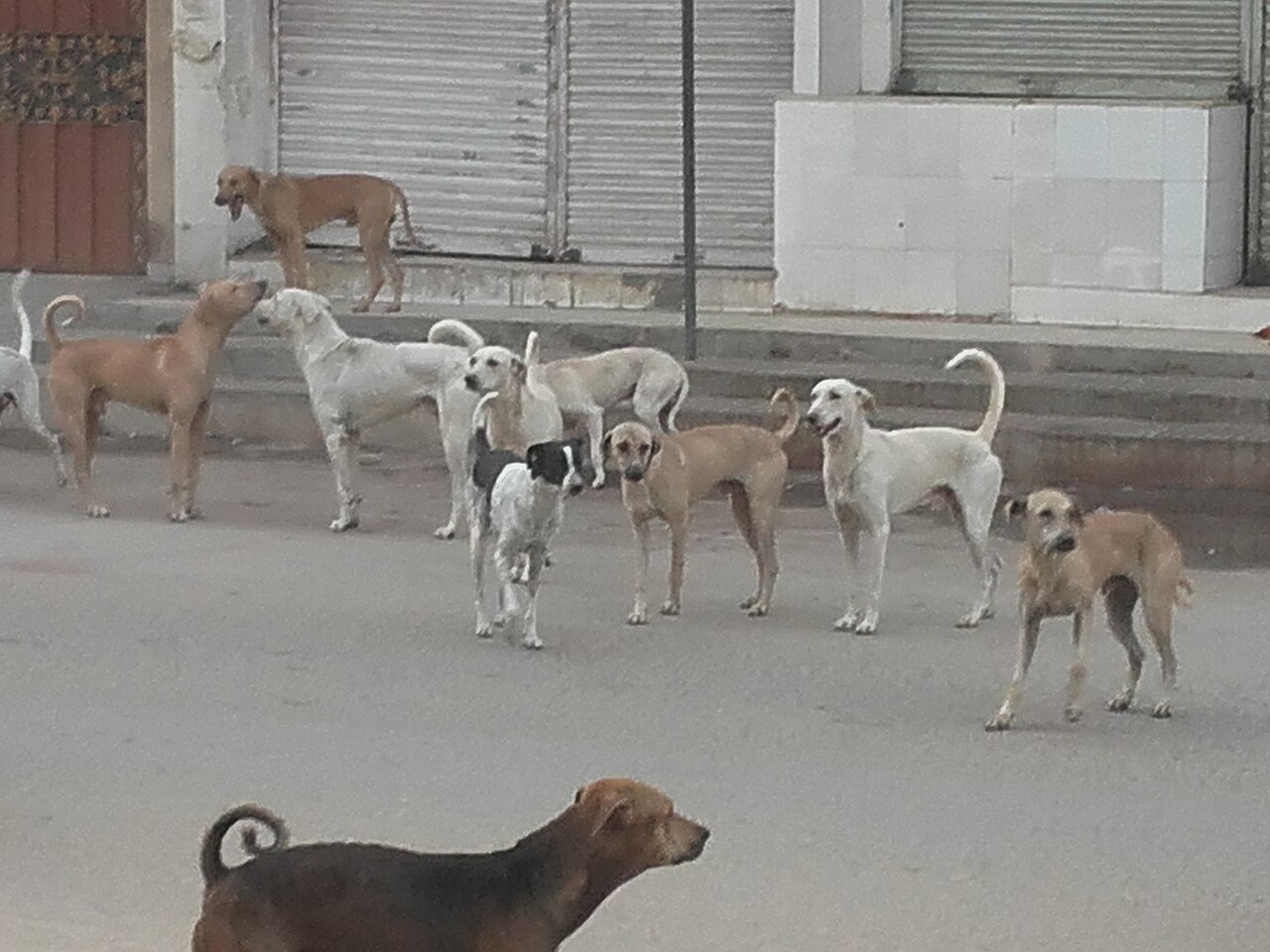
- Surplus killing: Wild predators generally kill what they need to eat. Dogs in a pack-chase frenzy will attack, maul, and kill animal after animal without consuming any. A pack of 3 loose dogs can injure or kill 20+ sheep in a single night.
- Mutilation over clean kills: Dog attacks are often identifiable because the injuries are different from wild predator kills. Dogs tend to attack the hindquarters, ears, and flanks, leaving animals alive but severely injured. Many attacked animals must be euthanized even if they survive the initial assault.
- Lack of fear: Feral and stray dogs are partially socialized to humans, which means they are also less afraid of LGDs than wild predators. A coyote will flee from LGD barking; a loose dog may challenge the LGD directly.
- Disease transmission: Stray dogs carry rabies, distemper, parvovirus, and parasites that they can transmit to both livestock and LGDs through contact or bite wounds.
How LGDs Respond to Dogs
- Immediate confrontation: LGDs rarely go through the full escalation-of-force sequence with intruding dogs. They often skip straight to charging and physical engagement.
- No negotiation: With coyotes, there is usually a barking phase that gives the predator a chance to retreat. With strange dogs, LGDs may attack on sight, especially if the intruder is near the stock.
- Risk: This aggression is a double-edged sword. If a neighbor’s pet dog wanders onto your property, your LGD may injure or kill it. This creates legal and neighborly complications that must be managed proactively.
Categories of Dog Threats
| Type | Description | Risk Level | Management |
|---|---|---|---|
| Neighbor’s pet | Free-roaming domestic dog that wanders onto your property | MODERATE | Talk to neighbors. Fencing. Document incidents. |
| Stray dogs | Abandoned or loose dogs with no owner. Often travel in pairs. | HIGH | Contact animal control. LGD deterrence. Secure fencing. |
| Feral packs | Multi-generational feral dogs living wild. Pack behavior. | VERY HIGH | Multiple LGDs. Coordinate with county animal control. May require lethal control. |
| Dumped dogs | Dogs abandoned on rural roads. Often hungry, desperate. | MODERATE-HIGH | Immediate response. Capture or deter. Report to authorities. |
Legal Considerations
Dog-on-livestock attacks create a legal landscape that differs significantly from wildlife predation:
- Right to protect livestock: Most states allow livestock owners to shoot dogs caught in the act of attacking or chasing livestock. This is a significant legal protection that does not apply to protected wildlife species.
- Liability: The dog’s owner is generally liable for all livestock losses caused by their dog. Document everything: photographs, veterinary bills, witness statements.
- Your LGD’s actions: If your LGD injures or kills an intruding dog on your property while defending livestock, you are typically protected under livestock protection laws. However, this varies by state and municipality.
- Leash laws: Many rural counties have laws requiring dogs to be confined or leashed. Report repeat offenders to animal control to establish a paper trail.
Prevention Strategies
- Good fencing: A well-maintained perimeter fence (5+ feet, with electric or barbed wire top) deters most loose dogs.
- LGD pairing: Even one LGD dramatically reduces dog attacks because the territorial response is so strong. A pair provides reliable 24/7 coverage.
- Neighbor communication: Many dog attacks come from neighbors’ pets. Proactive, friendly communication about your livestock operation prevents most incidents.
- Trail cameras: Motion-activated cameras on gates and fence corners document intruding dogs and provide evidence for legal proceedings if needed.
- Spay/neuter outreach: In areas with feral dog problems, supporting local spay/neuter programs reduces the population over time.
Boitani, L., & Ciucci, P. (1995). Comparative social ecology of feral dogs and wolves. Ethology Ecology & Evolution, 7(1), 49–72.
Green, J. S., & Woodruff, R. A. (1988). Breed comparisons and characteristics of use of livestock guarding dogs. Journal of Range Management, 41(3), 249–251.
Hygnstrom, S. E., et al. (1994). Prevention and Control of Wildlife Damage. University of Nebraska Cooperative Extension.
Rigg, R. (2001). Livestock guarding dogs: Their current use world wide. IUCN/SSC Canid Specialist Group Occasional Paper No. 1.
USDA APHIS. (2015). Cattle and calf predator death losses, 2015. National Agricultural Statistics Service.