Coyote — Species Intelligence
Canis latransDecoy-and-flank tactics — One or two coyotes draw the LGD away from the flock while others circle to the undefended side. Highly intelligent, adaptive, and persistent.
Pairs or small packs (2–6) — Mated pairs are the core hunting unit. Family groups form loose packs seasonally. Solitary coyotes also hunt small livestock and poultry.
Crepuscular (dawn/dusk) — Peak activity just after sunset and before sunrise. Also active during full darkness. This is the #1 livestock predator in North America by volume of kills.
~300 PSI
Skull: 17–21 cm | vs. LGD: ~743 PSI
Rabies (major reservoir in TX/SE), Sarcoptic Mange (highly transmissible to dogs), Canine Distemper, Parvovirus
Millions — present in all 49 continental states plus Alaska. Found in every habitat from wilderness to urban centers. Population has only increased despite centuries of control efforts.
20–50 lbs (9–23 kg) — Eastern coyotes (coywolves) are larger, up to 55 lbs due to wolf hybridization. Significantly smaller than LGDs, making single-dog defense viable in most cases.
5–7 pups per year — Mating: Jan–Mar. Pups disperse by fall. Coyotes compensate for removal with larger litters — killing 75% of the breeding population annually is needed to reduce density.
Total continental saturation. Originally a western prairie species. Now occupies every U.S. state except Hawaii. Thrives in urban, suburban, and rural environments. This expansion accelerated after wolf extirpation removed competition.
5–25 sq mi per pair — Much smaller than wolves, meaning multiple coyote pairs may overlap a single farm. Territories are smaller in urban/suburban areas.
Clinical Triage & Wound ID
If your dog was attacked by a coyote, the wound pattern requires specific triage. For a complete clinical breakdown of wound distribution and severity, see our Forensic Wound Identification Matrix.
Key Takeaways
- LGDs dominate this matchup: At ~743 PSI vs. ~300 PSI and 2–3x the body weight, a single LGD can physically outmatch any coyote. This is the #1 threat LGDs are deployed against.
- Watch for the decoy tactic: Coyotes will sacrifice one member to lure your dog away while others attack from the opposite side. Multiple LGDs or LGDs that stay with the flock (not chase) solve this.
- You cannot eliminate them — only deter: 75% annual removal of the breeding population is needed to reduce density. Coyotes compensate with larger litters. LGDs are the most sustainable, permanent deterrent available.
Pack Tactics
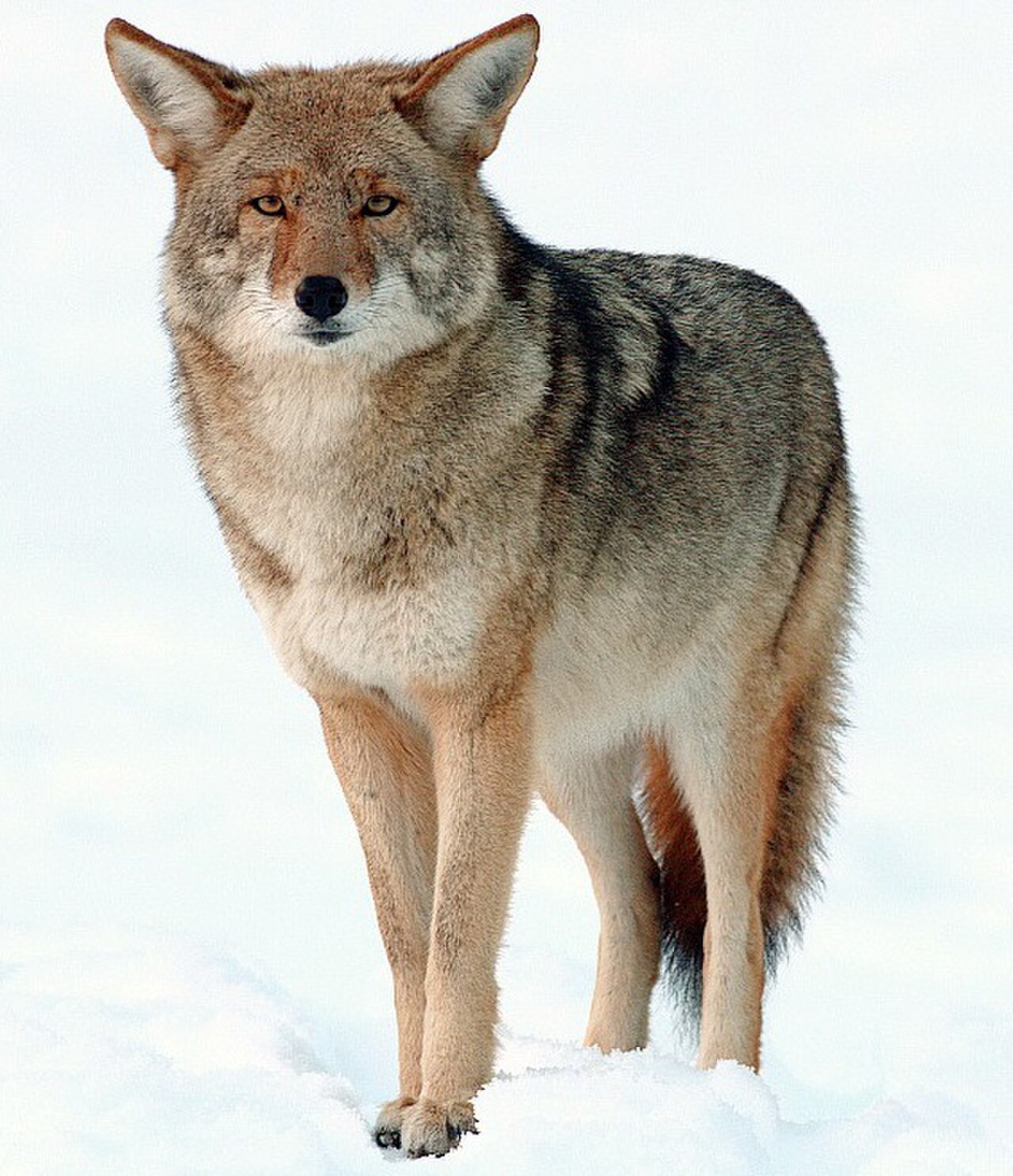
Coyotes use sophisticated pack tactics to draw LGDs away from the flock. The classic "decoy and flank" involves one or two coyotes approaching openly to trigger a chase response, while the rest of the group circles to the undefended side of the herd.
Through natural instinct and centuries of selective breeding, LGDs have developed specific tactics to handle this class of predator safely and effectively. Breeds that stay close to the flock rather than chasing (like Akbash or Great Pyrenees) are particularly effective against coyote decoy tactics.
Boundary Marking
LGDs establish wide perimeters of scent markers to keep coyotes at bay. Research shows LGDs patrol a median distance of 86 meters from the flock, with wider patrols at night and during crepuscular periods — exactly when coyotes are most active. (Mosley et al., 2020)
Tactical Implementation
An LGD's success relies heavily on the owner providing the right environment. Proper containment fencing, keeping brush cleared within 100 feet of pens, and ensuring your LGD can't be drawn into a prolonged chase are crucial. Consider breeds with low chase drive for coyote-dominant regions.
Physical Deterrence
When coyotes breach the line, LGDs respond with swift physical engagement. This is the one predator class where the LGD has a decisive physical advantage — outweighing a coyote 2–3x with nearly 2.5x the bite force. A single experienced LGD can kill a coyote in close combat.
At ~743 PSI versus the coyote's ~300 PSI, and with nearly three times the body mass, a single Livestock Guardian Dog physically outmatches any coyote. Biomechanical Advantage
Field Efficacy Studies
LGDs are globally recognized as one of the most effective non-lethal livestock protection tools. A comprehensive review of guardian animals (Smith et al., 2000) found that LGDs reduce predation—specifically documented for coyotes—by 11% to 100% across various operations. While alternative guardian animals like donkeys and llamas are also used, LGDs remain the most prevalent and adaptable deterrent against canid predators.
Furthermore, case studies focusing specifically on California sheep, calf, and poultry operations facing intense predator pressure (Macon & Whitesell, 2021) highlight the complex realities of field deployment. In these studies, while LGDs did not always completely eliminate livestock losses to coyotes and mountain lions, operator satisfaction remained extremely high. The data illustrates that even when occasional predation occurs due to environmental factors or pack tactics, the dramatic reduction in overall losses provided by LGDs makes them an invaluable asset.
The Compensatory Reproduction Problem
The key insight for LGD owners: you will never eliminate coyotes from your area. Research shows that coyote populations compensate for removal with larger litter sizes. Connolly & Longhurst's simulation model estimated that a minimum annual removal of 75% of the breeding population would be needed to consistently reduce density — a threshold no control program has ever achieved. This is precisely why LGDs are the most effective long-term solution: they provide permanent, sustainable deterrence without triggering compensatory reproduction.
Calving & Kidding Season: Peak Vulnerability
Coyote predation on livestock spikes dramatically during calving season (late winter–spring) and kidding season (spring). Neonates are the primary target — a newborn calf or kid is vulnerable for the first 24–72 hours before it can stand, run, and keep up with the herd.
During these critical windows, coyote behavior shifts from opportunistic scavenging to targeted neonatal predation. Key factors that elevate risk:
- Birth fluids and afterbirth act as powerful attractants detectable from significant distance
- Separated mothers during labor create gaps in herd protection that coyotes exploit
- Coyote denning season (March–May) overlaps with many calving/kidding schedules — adult coyotes with pups to feed are significantly more aggressive and persistent
- Nighttime births are especially vulnerable if LGD coverage is inadequate
LGD Deployment During Calving/Kidding
- Increase LGD presence in birthing areas — station dedicated dogs near calving pastures or kidding barns
- Remove afterbirth promptly — do not leave placental material in the field
- Night penning is essential during peak birthing windows
- Supplement with lighting — motion-activated lights on birthing pasture perimeters
- Bonded dogs are critical — an LGD that has been raised with the livestock species will instinctively prioritize neonates
Macon, D., & Whitesell, C. (2021). The case for case studies: A new approach to evaluating the effectiveness of livestock protection tools. California Fish and Wildlife, 107(3):173-183.
Smith, M. E., Linnell, J. D. C., Odden, J., & Swenson, J. E. (2000). Review of methods to reduce livestock depredation: I. Guardian animals. Acta Agriculturæ Scandinavica, Section A — Animal Science, 50(4), 279-290.
Mosley et al. (2020). LGD patrol distance behavioral study.
Jensen et al. (2022). Range-wide coyote diet meta-analysis.
Connolly and Longhurst. Coyote compensatory reproduction simulation model.