Brown Bear / Grizzly — Species Intelligence
Ursus arctosOpportunistic omnivore — Bears do not hunt livestock in the way wolves do. They investigate food sources, raid corrals, and take vulnerable animals (newborns, injured). They are powerful enough to break through most fencing.
Solitary — Bears hunt and forage alone, except mothers with cubs. This is a tactical advantage for LGDs: a group of dogs only faces one opponent at a time.
Crepuscular, with nocturnal feeding — Bears feed during daylight but frequently approach livestock pens at night when human activity ceases. Peak conflict during hyperphagia (pre-hibernation gorging).
~1,160 PSI
1,627 N canine | BFQ: 76.07 | Skull: 38–40 cm
Rabies (wildlife reservoir), Trichinella (from scavenging carcasses), Leptospirosis (contaminated water sources), Mange (sarcoptic — shared parasite)
~1,900+ grizzly in lower 48 (Yellowstone & NCDE). ~800,000+ black bears across 40+ states. Grizzly ESA-listed Threatened since 1975.
Grizzly: 400–800 lbs (180–360 kg) — Males significantly larger. Black bears: 200–400 lbs. Both massively outweigh any LGD. Physical confrontation is not viable.
1–3 cubs every 2–3 years — Mating season: May–July. Delayed implantation means cubs born Jan–Feb in the den. This slow reproduction rate limits population growth — Yellowstone grizzlies took 37 years to triple.
Slow but steady. Grizzlies expanding beyond Yellowstone/NCDE recovery zones into Montana ranch country. Black bears recolonizing eastern states they were absent from for a century. Both populations growing.
Males: 100–600 sq mi — Females: 50–150 sq mi. Home ranges overlap extensively (bears are not territorial in the wolf sense). During hyperphagia they range further seeking food.
Clinical Triage & Wound ID
If your dog was attacked by a bear, the wound pattern requires specific triage. For a complete clinical breakdown of wound distribution and severity, see our Forensic Wound Identification Matrix.
Key Takeaways
- LGDs deter — they do not fight bears: An LGD cannot physically overpower a bear. A grizzly outweighs an LGD 3–5x and has longer skull-to-jaw leverage. The defense is psychological pressure through sustained barking and posturing.
- Bears are solitary — use numbers: Unlike wolf packs, bears approach alone. Multiple LGDs barking and lunging create the impression of a high-cost engagement the bear wants to avoid.
- Attractant management is critical: Unsecured feed, livestock carcasses, and compost bins within pasture range will override any LGD deterrence. Remove attractants before relying on dogs.
Psychological Deterrence
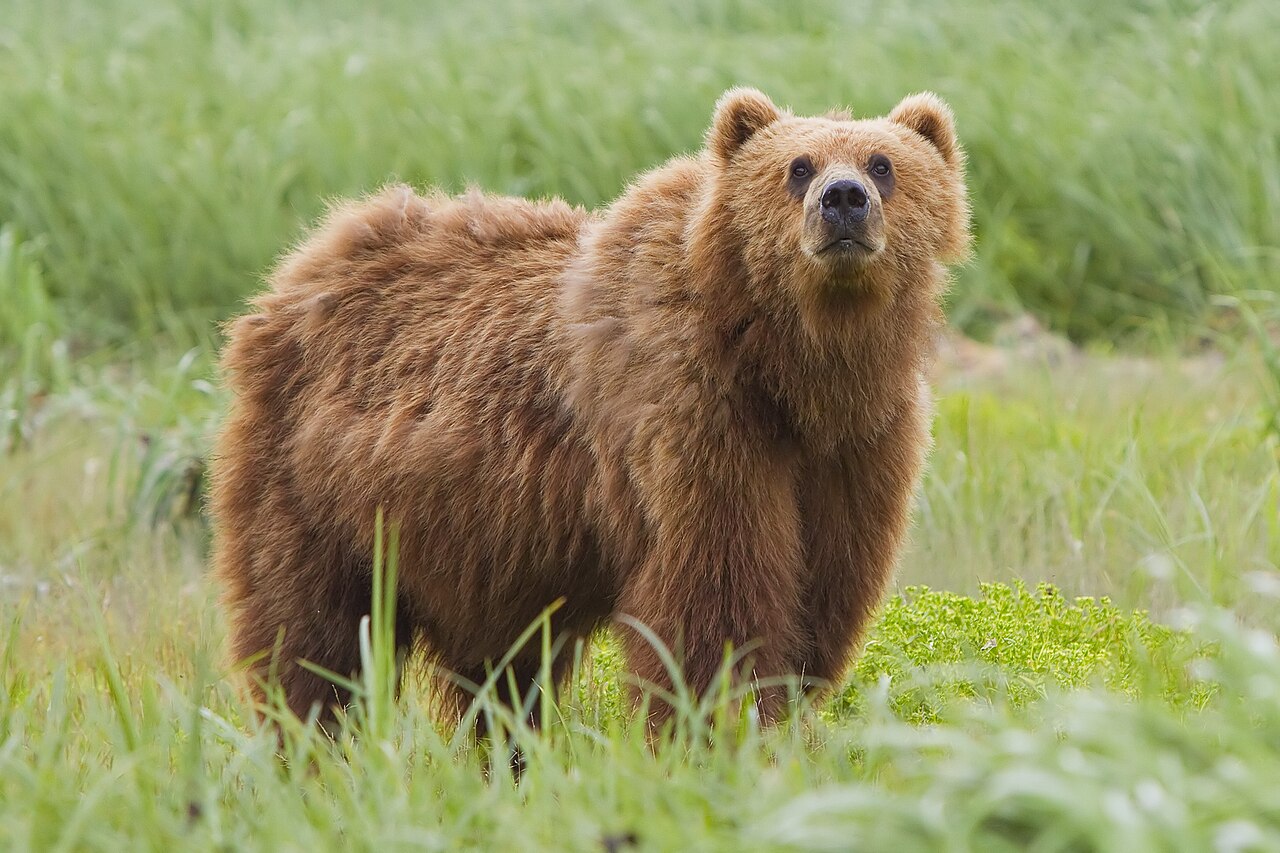
LGDs rarely engage bears physically. Instead, they create immense psychological pressure through barking and posturing. Through natural instinct and centuries of selective breeding, LGDs have developed specific tactics to handle this class of predator safely and effectively.
The biomechanical reality is clear: a bear's skull is up to 40 cm long compared to an LGD's 29 cm, providing far greater jaw leverage. The dog's true value is psychological — making the bear calculate that the cost of engaging is too high. Biomechanical Reality
Data: Dry skull estimates using Thomason lever model. Sources: Wroe et al. (2005) Proc. Royal Society B; Rózycka et al. (2024) Animals. BFQ = Bite Force Quotient (bite force adjusted for body mass; higher = more efficient).
Early Warning Systems
The primary role against bears is early detection, giving the flock time to move and the owner time to react. LGDs can detect approaching bears from hundreds of yards away through scent and hearing. Their alert barking triggers the flock's instinctive flight response well before the bear reaches the perimeter.
Tactical Implementation
An LGD's success against bears relies heavily on the owner providing the right environment. Proper containment fencing, electric fence reinforcement, secure feed storage, and removing livestock carcasses from pastures are crucial. Bears are highly food-motivated — if the attractant remains, the bear will return regardless of dog pressure.
Managing Conflict
If forced into close quarters, LGDs will group up and continuously harass the bear to prevent it from settling near the flock. They work in relay — maintaining constant pressure without fully committing to a fight. This exhaustion strategy exploits the bear's solitary nature: it has no pack to rotate with.
Seasonal Risk: Hyperphagia
Bear conflict spikes during hyperphagia — the pre-hibernation gorging period (late summer through fall) when bears consume up to 20,000 calories daily. During this window, a bear's drive to feed can override its natural avoidance of dogs and people. LGD owners in bear country should increase vigilance and consider supplemental deterrents (electric fencing, motion-activated lights) during August–October.