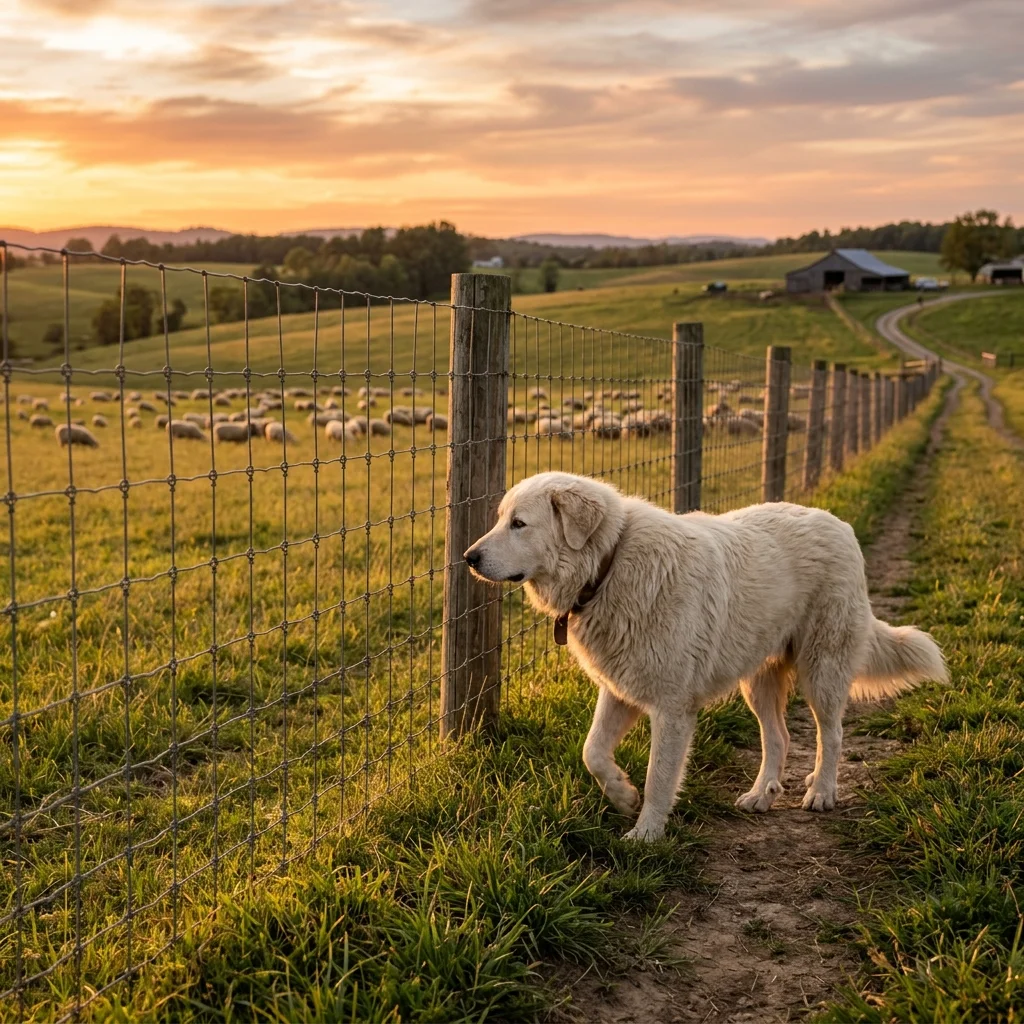
Key Takeaways
- Barking Is the Job: Nocturnal vocalization is the primary predator deterrent mechanism in livestock guardian dogs; suppressing it fundamentally undermines their working function.
- Crepuscular Activity: LGDs are naturally crepuscular and nocturnal — most active at dawn, dusk, and overnight — because predators are most active during these periods.
- Breed Variation: Vocalization frequency differs significantly across breeds; Great Pyrenees are among the most vocal, while Anatolian Shepherds and Central Asian Shepherds tend to be more discriminating barkers.
Why LGDs Bark
Understanding the purpose of barking helps you live with it:
- Warning to predators: "This territory is defended. Go elsewhere."
- Alert to livestock: Signaling to stay nearby or be alert
- Communication: With other dogs, livestock, and humans
- Territory marking: Auditory definition of boundaries
- Stress release: Sometimes reactive barking to frustration
In traditional pastoral settings, barking was valued?it meant the dog was working. Modern contexts with neighbors change the equation, but the dog's purpose hasn't.
Nighttime Activity
LGDs are crepuscular and nocturnal, meaning they're most active at dawn, dusk, and throughout the night:
- Predator timing: Most predators are active at night
- Patrol behavior: Circling territory when threats are most likely
- Lower distractions: Less human activity means more focus on job
- Cooler temperatures: Heavy-coated breeds prefer nighttime activity in warm weather
This means your LGD will often sleep during the day and work at night. This is normal and appropriate.
Types of Barking
Learn to recognize what different barking means:
Alarm Barking
Sharp, persistent barking at a specific trigger. The dog has identified something concerning and is responding. This is the core of LGD work.
Perimeter Barking
Periodic barking while patrolling, announcing presence and territory. Often happens in rounds as the dog circuits the property.
Communication Barking
Back-and-forth with other dogs (neighboring LGDs, wild canids). Can escalate and become prolonged.
Boredom/Frustration Barking
Repetitive, without clear target. May indicate under-stimulation, poor bonding, or management issues.
Managing Barking
You cannot eliminate barking, but you can influence it:
What May Help
- Reduce stimuli: Manage sight lines to roads, neighbors, wildlife feeders
- Adequate territory: Dogs with appropriate space may bark less
- Proper bonding: Well-bonded dogs focus on real threats, not everything
- Maturity: Younger dogs often bark more; adults may be more discerning
- Multiple dogs: Sometimes reduces anxiety barking (but can increase communication barking)
What Doesn't Usually Work
- Yelling at the dog: They think you're joining in
- Punishment: Suppresses one of their core functions
- Bark collars: Often ineffective on determined dogs; can cause stress
- Expecting silence: An unrealistic expectation for this type of dog
Neighbor Relations
If you have neighbors within earshot:
- Talk to them first: Before you get an LGD, explain what to expect
- Distance matters: More space between dogs and neighbors is better
- Check local ordinances: Some areas have noise restrictions
- Be realistic: If neighbors are close and likely to complain, reconsider
- Good relations help: Neighbors who understand are more tolerant
When Barking Seems Excessive
If barking seems beyond normal, consider:
- Is there a trigger? New neighbors, wildlife changes, new animals nearby?
- Health issues? Pain or disease can cause behavioral changes
- Incomplete bonding? Dogs not bonded to livestock may bark more at everything
- Anxiety? Dogs that feel insecure may bark to reassure themselves
- Breed tendency? Some breeds are more vocal than others
Breed Variation
Breeds differ in vocalization tendencies:
- Great Pyrenees: Known as vocal; frequent barkers
- Anatolian/Kangal: Often described as more discriminating
- Akbash: Variable; some lines more vocal
- Maremma: Generally moderate
- Central Asian: Often described as more reserved
Note: Individual variation within breeds is significant. These are generalizations.
Coppinger, R., & Coppinger, L. (2001). Dogs: A Startling New Understanding of Canine Origin, Behavior & Evolution. Scribner.
Marker, L. L., et al. (2005). Aspects of the management of cheetahs trapped on Namibian farmlands. Biological Conservation.
Rigg, R. (2001). Livestock guarding dogs: their current use world wide. IUCN/SSC Canid Specialist Group Occasional Paper No. 1.
VerCauteren, K. C., et al. (2012). Livestock protection dogs in the 21st century: Is an ancient tool relevant to modern conservation challenges? BioScience.