Key Takeaways
- The Critical Window: The primary socialization period for puppies occurs strictly between 3 and 12 weeks of age; isolation during this period produces profound, often irreversible behavioral deficits.
- Fear Prevention: Positive, controlled exposure to novel stimuli (livestock, handlers, environmental sounds) during early development is essential to prevent fear-based aggression in adulthood.
- Stress Resilience: Gentle handling and neurological stimulation in early puppyhood are scientifically proven to improve long-term stress resilience and emotional stability.
What "Socialized" Means for a Working LGD
For a pet dog, "socialized" means friendly to strangers, comfortable in crowds, and tolerant of other dogs. For a working LGD, "socialized" means something very different:
- Tolerates handling: Allows the owner to examine paws, ears, mouth, and body without aggression. This is essential for veterinary care and daily management.
- Accepts routine visitors: Does not attack the veterinarian, farrier, feed delivery driver, or neighbor walking their dog along the fence line.
- Ignores non-threats: Does not react aggressively to vehicles, farm equipment, thunderstorms, or livestock behavior (birthing, feeding).
- Maintains livestock priority: Remains bonded to and focused on its livestock charges rather than seeking human companionship.
- Discriminates threats: Can distinguish between a coyote at the fence line (threat) and the neighbor's cat passing through (not a threat).
Critical Socialization Windows
Canine behavioral development has well-documented sensitive periods. For LGDs, these windows determine both livestock bonding and human tolerance:
3-5 Weeks: Primary Socialization
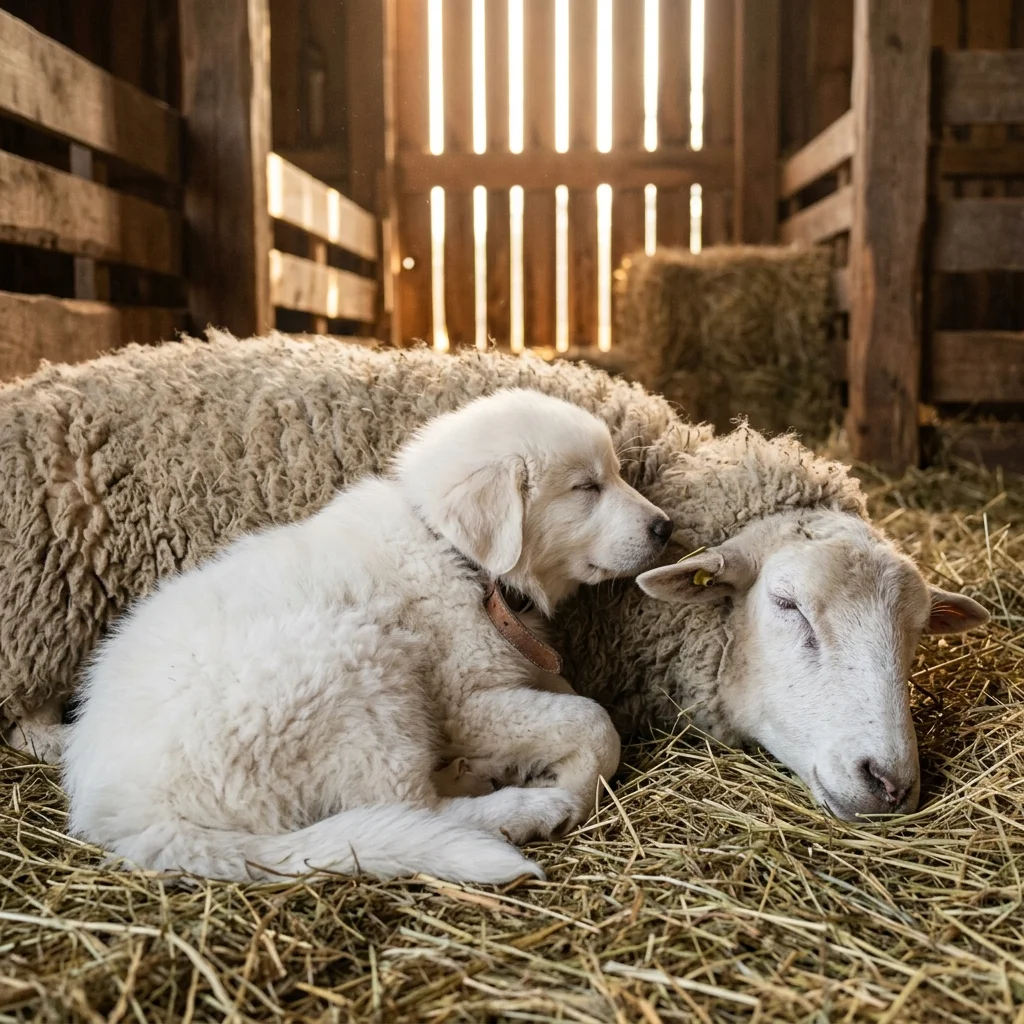
Puppies begin recognizing species during this period. In successful LGD programs, puppies are whelped near livestock so they imprint on stock sounds and smells from birth. The breeder's handling during this window establishes baseline human tolerance.
5-8 Weeks: Species Identification
This is when the puppy's brain decides "what kind of animal am I?" Puppies raised exclusively with dogs during this window may never bond properly to livestock. Puppies raised exclusively with livestock may become unmanageable by humans. The best breeders ensure both exposures during this window:
- 60-70% of time near livestock (visual and olfactory contact through safe barriers)
- 30-40% of time with dam and littermates
- Brief, positive human handling sessions (5-10 minutes, 2-3 times daily)
8-16 Weeks: The Critical Transfer Window
This is when most puppies go to their working homes. What happens during these 8 weeks often determines whether the dog succeeds or fails as a guardian:
- Livestock introduction: Graduated exposure — visual contact first, then supervised visits, then extended supervised stays. Never unsupervised at this age.
- Human handling: Continue daily handling (feet, ears, mouth) but do not make the puppy a "house dog." The puppy should sleep near stock, not on your couch.
- Environmental exposure: Introduce farm sounds (tractors, ATVs, gunshots if relevant), weather, and terrain. A puppy that's afraid of the tractor at 6 months is much harder to fix than one exposed at 10 weeks.
- Novel people: Let the puppy see and calmly observe 3-5 different people during this window. Not play with — observe. This prevents stranger-aggression without creating stranger-friendliness.
4-8 Months: Adolescent Socialization
The "teenage" phase. The puppy is testing boundaries, may start chasing livestock, and is beginning to express guarding behaviors (barking at perceived threats, posturing). During this period:
- Redirect livestock chasing immediately — do not wait for the dog to "grow out of it"
- Continue daily handling but keep sessions brief and purposeful
- Begin leash training for veterinary visits (not for walks around the neighborhood)
- Do not isolate the dog with livestock 24/7 — check in regularly so the dog maintains human tolerance
Full age-based development guide.
The Over-Socialization Problem
This is a real and underappreciated risk, especially with hobby farm dogs and "dual-purpose" LGDs that owners want to function as both guardians and family pets:
Signs of Over-Socialization
- Dog consistently leaves livestock to come greet visitors
- Dog prefers sleeping on the porch or near the house instead of with stock
- Dog seeks human attention and physical affection over livestock company
- Dog ignores predator activity to play with the family's other dogs
- Dog follows the owner around the property instead of patrolling independently
What Causes It
- Raising the puppy in the house during its first months
- Frequent dog park visits and social outings
- Excessive play sessions with family dogs
- Treating the LGD puppy like a pet rather than a working dog in training
Can It Be Fixed?
Sometimes. An over-socialized young dog (under 12 months) can often be re-directed by increasing livestock time and decreasing human interaction. An over-socialized adult (2+ years) is much harder to correct. In severe cases, the dog may never develop reliable independent guarding behavior and may be better suited as a companion animal. Rehoming guide for LGDs that aren't working out.
The Under-Socialization Problem
The opposite extreme is equally problematic — a dog so poorly socialized to humans that it cannot be safely handled:
Signs of Under-Socialization
- Dog cannot be approached for medical care or parasite treatment
- Dog is fear-aggressive toward the veterinarian
- Dog bites or lunges when strangers enter the pasture (including utility workers, delivery drivers)
- Dog panics during transport (can't be loaded into a vehicle for vet visits)
Prevention
Under-socialization is almost always preventable with consistent handling from puppyhood. Even 5 minutes of daily positive-association handling (touch feet, open mouth, lift ears — paired with a treat) during the first 6 months is usually enough to produce a dog that tolerates human management.
The Dual-Purpose Question
Many hobby farm owners want a dog that guards livestock during the day and comes inside in the evening to be with the family. Is this realistic?
It Can Work If...
You choose a breed with moderate independence (Pyrenees, Maremma)
The dog has a clear routine (outside 6AM-8PM, inside overnight)
Your livestock is locked in a secure coop/barn overnight
You accept that guarding effectiveness may be 70-80% of a full-time LGD
It Usually Fails If...
You choose a high-independence breed (Kangal, CAS, Caucasian)
Your primary predator pressure is nocturnal (coyotes, foxes)
The dog spends more time inside than outside
Children treat the dog as a pet rather than a working animal
Socialization Checklist: 0-16 Weeks
Use this checklist to ensure balanced socialization during the critical window:
Weeks 0-5 (Breeder's Responsibility)
- Puppies whelped near livestock (within sight/smell)
- Daily human handling by breeder (5 min per puppy)
- Exposure to normal farm sounds
- Time with dam and littermates (normal canine socialization)
Weeks 5-8 (Breeder or New Owner)
- Direct contact with livestock through safe barrier (pen within pen)
- 2-3 brief human handling sessions daily
- Introduction to 2-3 different people (calm observation, not play)
- Exposure to feeding routine, water troughs, shelters
Weeks 8-12 (New Owner)
- Supervised livestock introduction (start with calm, older animals)
- Puppy sleeps near stock (not in the house)
- Daily feet/ear/mouth handling (paired with small treat)
- Introduction to farm vehicles, equipment sounds
- Begin collar and basic leash introduction (for vet visits only)
Weeks 12-16 (New Owner)
- Extended supervised time with livestock
- First veterinary visit (positive experience)
- Continue daily handling routine
- Monitor for play-chasing behavior — redirect immediately if seen
- Allow puppy to begin making independent decisions about territory