Key Takeaways
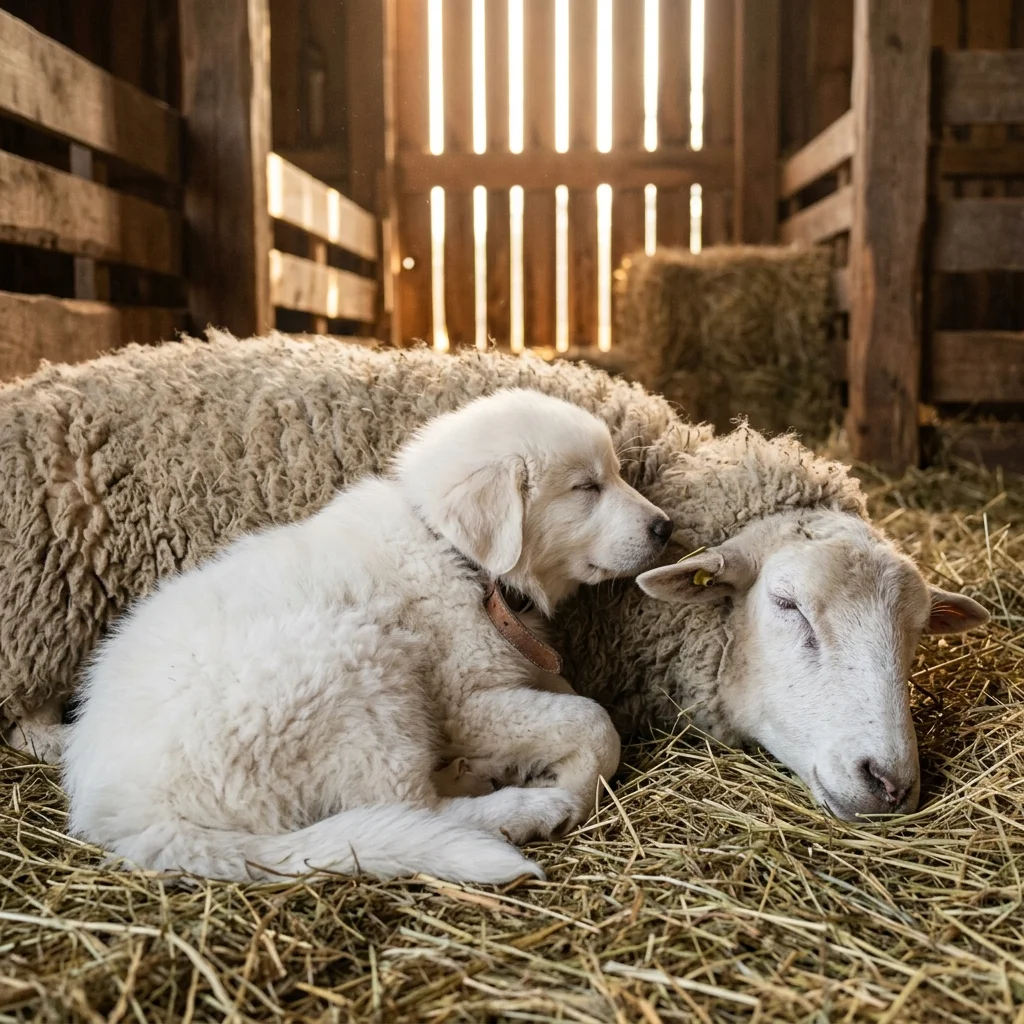
- The 3–12 Week Window: The Hampshire College Livestock Dog Project established that early livestock exposure during the 3–12 week socialization window is the single most important factor in producing a reliably bonded guardian dog.
- Proximity Is Non-Negotiable: Puppies raised in the house and then placed with livestock consistently show weaker bonds and higher failure rates than puppies raised with livestock from birth.
- Adolescent Testing Is Normal: Boundary-testing behavior between 6–18 months is a predictable developmental phase, not a failure of bonding — consistent management during this period protects the developing attachment.
What is Bonding?
In the context of livestock guardian dogs, "bonding" refers to the attachment a dog forms with the animals it will protect. A well-bonded LGD sees livestock as family?as members of its social group worth defending.
This bond is different from the bond dogs form with humans. It's a protective attachment that makes the dog want to stay with and guard its charges, not an obedience relationship.
What is Imprinting?
Imprinting, in the strictest sense, refers to a specific developmental window (typically in very young animals) when lasting attachments form. For LGDs, we use the term more loosely to describe early exposure that shapes the dog's future behavior.
Early, positive exposure to livestock during puppyhood creates a lasting comfort and familiarity that supports later bonding and protective behavior.
Critical Developmental Periods
While dogs can bond at any age, certain periods are especially influential:
Birth to 3 Weeks
Puppies born in a barn or livestock environment absorb the sights, sounds, and smells of farm life from the beginning. This early environment shapes their sense of "normal."
3 to 12 Weeks (Socialization Window)
This is the most critical period. Experiences during this time have lasting effects:
- Puppies should be with livestock (under supervision)
- Positive interactions with calm, non-aggressive animals
- Limited but normal human interaction
- Exposure to the environment where they'll work
3 to 6 Months
Continued exposure and supervised time with livestock reinforces early bonding. Puppies are too young for unsupervised work but should be spending significant time with their charges.
6 to 18 Months (Adolescence)
Adolescence can challenge earlier bonding. Dogs may test boundaries, show playful or inappropriate behavior, and need management. Consistent supervision and correction during this phase protect the developing bond.
How Bonding Works
Effective bonding develops through:
- Physical proximity: Sleeping near, eating near, being with livestock
- Positive experiences: Calm animals that don't injure or traumatize the puppy
- Consistent environment: Livestock area is "home," not the house
- Limited competing bonds: Not over-bonded to humans or other dogs
- Time: Bonding strengthens over months and years
Signs of Bonding
How to recognize developing bonds:
- Dog chooses to stay with livestock when given options
- Relaxed body language around animals
- Following livestock movements calmly
- Sleeping near or among the flock/herd
- Alert response when livestock are stressed
- Distress when separated from livestock
What Undermines Bonding
- Raising puppies in the house as pets
- Too much human handling and socialization
- Keeping dogs with other dogs instead of livestock
- Aggressive livestock that injure or traumatize puppies
- No consistent access to livestock during critical periods
- Frequent moves between different animal groups
Bonding and Rehomed Dogs
Dogs rehomed as adults can still bond, but it's different:
- Adjustment period is often longer
- Previous experiences affect behavior (positively or negatively)
- Dogs improperly raised may never fully bond
- Well-raised dogs can transfer loyalty to new livestock
If acquiring an adult LGD, ask detailed questions about how it was raised and its history with livestock.
Species-Specific Bonding
Some considerations for different livestock:
- Sheep/Goats: Most traditional LGD pairing; usually bond readily
- Cattle: Larger animals may injure puppies; careful introduction needed
- Poultry: Some dogs have difficulty; early exposure helps
- Mixed herds: Dogs can bond with multiple species if raised properly
Coppinger, R., et al. (1983). Attentiveness of guarding dogs for reducing predation on domestic sheep. Journal of Range Management.
Lorenz, J. R., & Coppinger, L. (1986). Raising and training a livestock-guarding dog. Oregon State University Extension.
Green, J. S., & Woodruff, R. A. (1988). Breed comparisons and characteristics of use of livestock guarding dogs. Journal of Range Management.
Marker, L. L., et al. (2005). Aspects of the management of cheetahs trapped on Namibian farmlands. Biological Conservation.
Serpell, J. A., & Hsu, Y. (2005). Development and validation of a novel method for evaluating behavior and temperament in guide dogs. Applied Animal Behaviour Science.