Key Takeaways
- Fencing, Not Training: LGD containment is a physical management problem, not a training problem — territory expansion is a genetically driven instinct that cannot be reliably trained away.
- Height Standard: A minimum fence height of 5 feet is required for most LGD breeds; 6 feet is recommended for known climbers such as Great Pyrenees and Akbash lines.
- Escape Escalation: Research on working dog management confirms that each successful escape reinforces the behavior; immediate fence repair after any breach is critical to prevent habitual roaming.
Why Fencing Matters
LGDs are not like pet dogs that can be taught to stay in a yard. Their instincts work against containment:
- Territory expansion: LGDs naturally want to patrol beyond immediate areas
- Independent decision-making: They don't wait for permission to investigate threats
- Nighttime activity: Most testing happens when you're asleep
- Protection drive: If they perceive a threat, they'll pursue it
This isn't "bad behavior"?it's what these dogs were bred to do. But in modern contexts, these instincts create problems without proper physical boundaries.
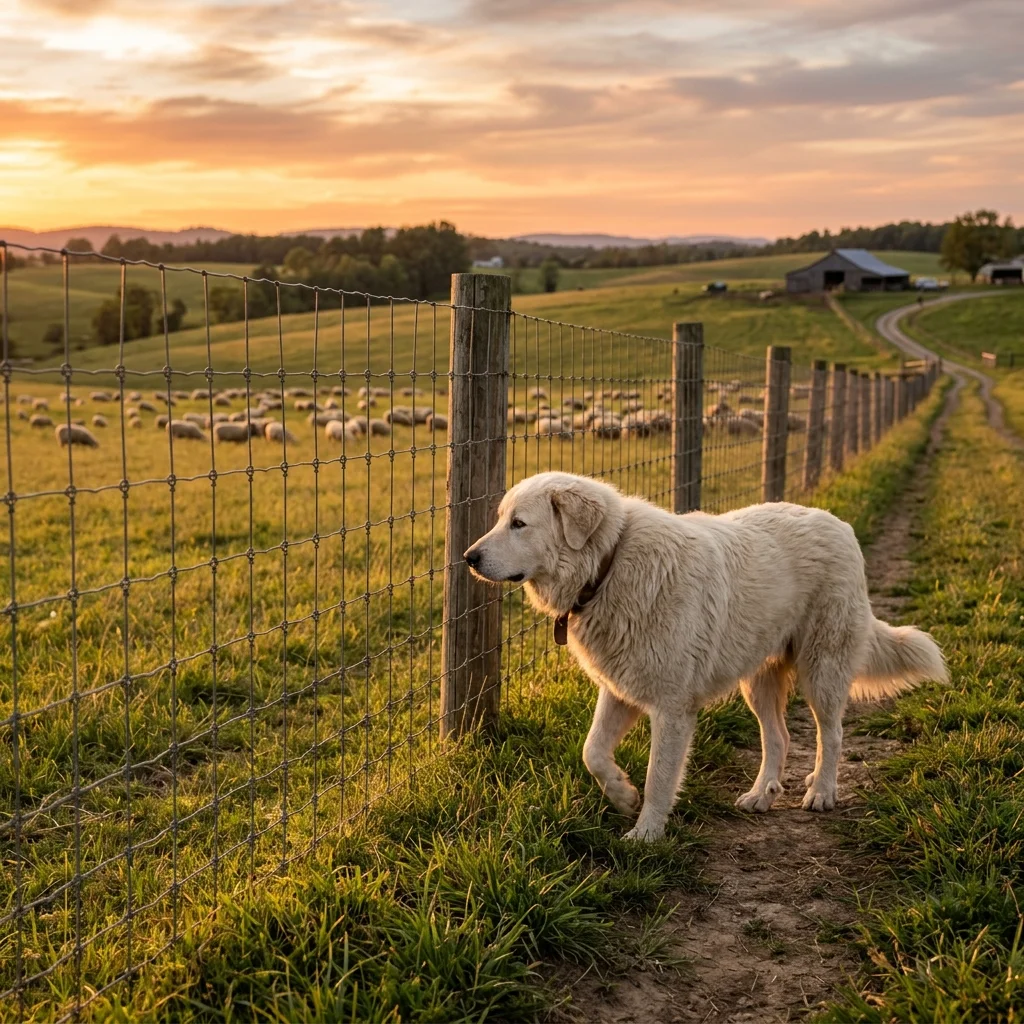
Fencing Basics
General principles for LGD containment:
- Height: Minimum 5 feet; 6 feet is better for climbers
- Ground level: Check for digging spots; apron wire or buried fence may help
- Gates: As secure as the fence itself; LGDs can open simple latches
- Regular inspection: Walk your fence line regularly
- Corners and posts: Common weak points
Fencing Types Compared
? Generally Effective
- Woven wire (5-6 ft) with tight ground line
- Chain link (6 ft) properly installed
- Welded wire panels (cattle/hog panels)
- Combination fencing (wire + electric)
- Board fence with wire backing
? Often Insufficient
- Electric-only fencing
- Barbed wire alone
- Low field fence (under 4 ft)
- Fencing with large gaps
- Poorly maintained fence of any type
Electric Fencing
Electric fencing can supplement but rarely works alone:
- Training required: Dogs must learn to respect the fence
- Maintenance needed: Vegetation shorts the fence; power must be consistent
- Not foolproof: Thick coats provide insulation; motivated dogs push through
- Best as addition: Hot wire at top of physical fence, or as interior divisions
Managing Climbers and Jumpers
Some LGDs are exceptional escape artists:
- Lean-in extensions: Adding angled sections at top
- Hot wire at top: Electric strand as deterrent
- Roller bars: PVC pipe on top rail prevents purchase for climbing
- Height increase: Sometimes the simple solution is building higher
- Addressing triggers: Some climbing is triggered by specific stimuli
Managing Diggers
Dogs that dig under fences need ground-level management:
- Apron wire: Wire extending outward at ground level
- Buried fencing: Fence extending 12+ inches underground
- Concrete footer: For permanent installations
- Large rocks: Placed at fence line (temporary solution)
- Fill persistent holes: With concrete or heavy materials
Starting Small
A useful strategy for new LGDs:
- Begin with a smaller, well-fenced bonding area within the larger pasture
- Allow the dog to establish comfort and routine in contained space
- Gradually expand access as the dog demonstrates reliability
- Maintain secure perimeter fencing throughout
This approach builds bonding and establishes territory gradually rather than expecting immediate boundary respect on acres of land.
When Escapes Happen
If your LGD escapes:
- Don't punish: Harsh corrections for escaping don't prevent future attempts
- Find the breach: Identify exactly where and how they escaped
- Fix immediately: One successful escape encourages more
- Evaluate motivation: What triggered the escape? Can you address it?
- Consider supervision: More oversight until the problem is solved
Legal and Liability Considerations
Escaped LGDs create serious issues:
- Dog-at-large laws: Many areas have ordinances
- Livestock harassment: If your dog bothers neighbors' animals
- Vehicle accidents: Dogs on roads create accidents and liability
- Dog attacks: Roaming dogs may fight or injure animals/people
- Shoot on sight: Some areas allow killing dogs threatening livestock
Good fencing protects your dog as much as it contains them.
Green, J. S., & Woodruff, R. A. (1988). Breed comparisons and characteristics of use of livestock guarding dogs. Journal of Range Management.
Rigg, R. (2001). Livestock guarding dogs: their current use world wide. IUCN/SSC Canid Specialist Group Occasional Paper No. 1.
VerCauteren, K. C., et al. (2012). Livestock protection dogs in the 21st century. BioScience.
Andelt, W. F. (1992). Effectiveness of livestock guarding dogs for reducing predation on domestic sheep. Wildlife Society Bulletin.