Black vultures (Coragyps atratus) are not just scavengers. Unlike their cousin the turkey vulture, black vultures actively prey on live animals — particularly newborn calves, lambs, piglets, and birthing mothers. Their range is expanding northward across the eastern United States at an unprecedented rate, and livestock producers in states like Indiana, Ohio, Pennsylvania, and Kentucky are experiencing devastating losses from a predator they have never dealt with before.
Key Takeaways
- Emerging Threat: Black vultures are rapidly expanding northward (1-2 degrees latitude per decade), actively predating on newborn livestock by targeting soft tissue (eyes, tongue, umbilical cord).
- Federal Protection: Protected under the Migratory Bird Treaty Act; they cannot be legally killed without a USFWS depredation permit. Non-lethal deterrence is mandatory.
- LGD Role: LGDs provide moderate deterrence by maintaining a ground presence during birthing windows and disrupting vulture staging behavior through barking, but are limited against large aerial roosts.
Black Vulture — Species Intelligence
Coragyps atratusGroup predation on live animals — Unlike turkey vultures, black vultures actively kill. Groups of 10–50+ surround newborns or birthing mothers and attack eyes, tongues, umbilical cords, and soft tissue. Prey is often eaten alive.
Communal roosts of 10–200+ — Highly social. Roost in large groups and coordinate attacks. Their numbers overwhelm individual deterrence. Persistent — they return within hours if not permanently displaced.
Diurnal (daytime only) — Black vultures are active during daylight, peaking mid-morning to afternoon. They stage in nearby trees before descending on targets. This is the opposite of most predators — LGDs need daytime vigilance too.
Soft tissue targeting — Eyes, nose, tongue, anus, and umbilical cord are primary targets. Cows found alive with eyes, tongues, and udders consumed. LGDs deter by ground presence near birthing animals.
Low direct risk — Vultures rarely engage LGDs physically. Primary concern is environmental contamination from large roosts (feces acidifying structures, water sources).
MBTA Protected — cannot legally kill without a federal depredation permit from USFWS. Permits require documented livestock losses. Contact USDA Wildlife Services.
3.5–6.6 lbs (1.6–3 kg) — 4.5 ft wingspan. Individually small, but attack power comes from numbers (10–50+), not individual size. A single vulture is not dangerous; a committee of 30 is lethal to a newborn.
1–3 eggs per year — Single clutch, typically 2 eggs. Slow reproduction but very high survival rate due to lack of natural predators. Population growing ~3.9% per year in core range.
Rapid northward expansion. Moving 1–2 degrees latitude per decade. Now confirmed in MI, WI, IA, and southern New England. Atlantic/Mississippi Flyway population estimated at 4.26 million. Climate change is the suspected primary driver.
Non-territorial, communal — Black vultures do not defend territories. They roost communally and range 40–50 miles daily from roost sites to feeding areas. A single roost can impact farms across a wide radius.
Not Just Scavengers: How Black Vultures Kill
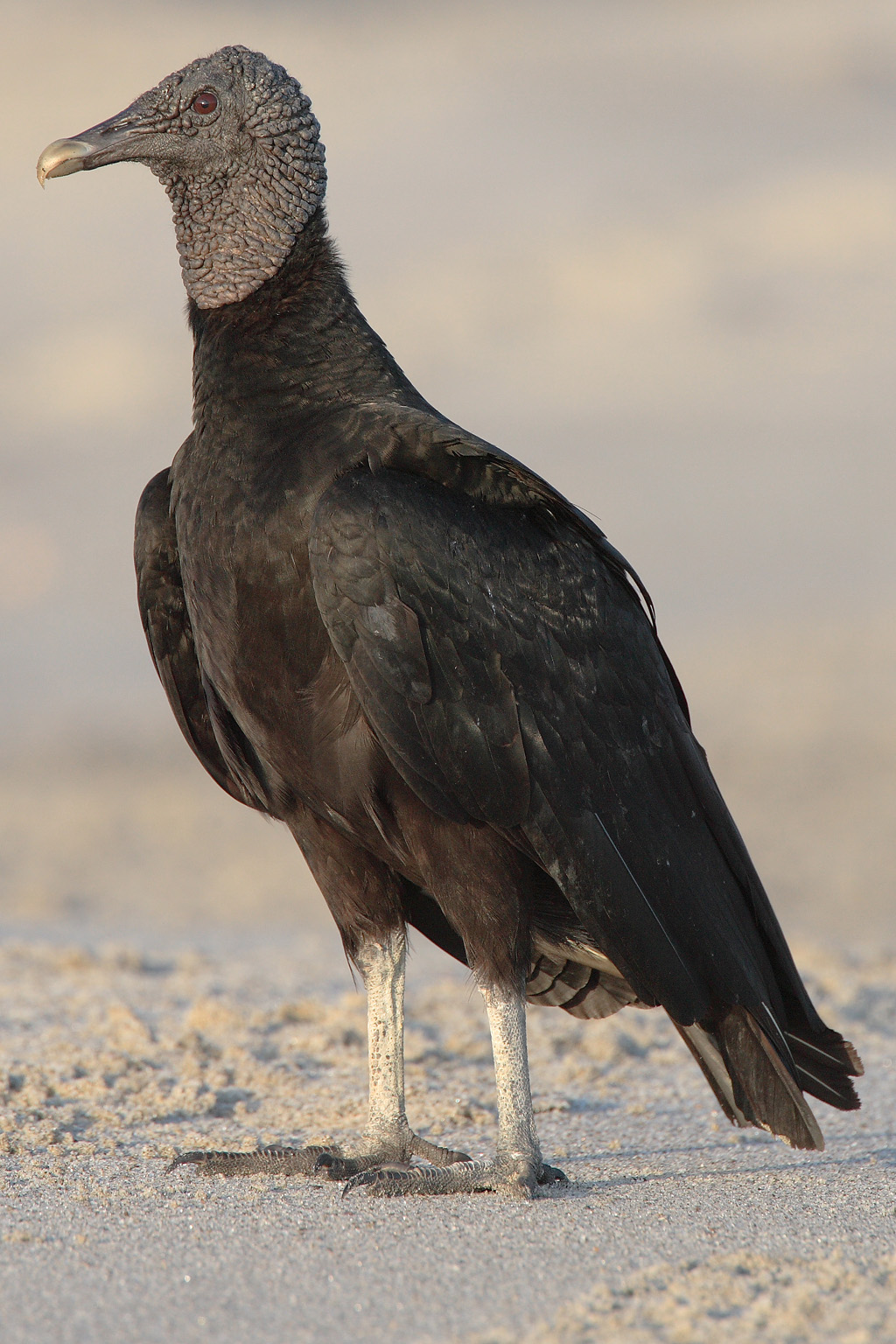
The black vulture’s predatory behavior is what separates it from the turkey vulture:
- Target selection: Newborn animals (calves within the first 48 hours, lambs, kids, piglets) and animals that are down, sick, or in the process of giving birth. Black vultures exploit vulnerability.
- Attack method: Groups of 10–50+ vultures surround the victim and attack the eyes, nose, tongue, anus, and umbilical cord — targeting soft tissue. The animal is often eaten alive.
- Birthing attacks: Black vultures target birthing cows and ewes during active labor. They attack the emerging calf/lamb and the mother’s exposed tissue simultaneously. Cows have been found alive with eyes, tongues, and udders consumed.
- Persistent: Unlike most predators that flee when disturbed, vulture groups will return within hours if not permanently deterred from the area.
Geographic Expansion Timeline
Black vultures have been expanding northward for over a century, but the pace has accelerated since the 1990s:
Traditional range: Gulf Coast, Florida, southeastern states. Core population centered on Central and South America.
Range expansion into Virginia, West Virginia, and the southern Appalachians. First documented livestock losses in the mid-Atlantic.
Established populations in Kentucky, Tennessee, southern Indiana, and southern Ohio. Livestock losses reported with increasing frequency.
Breeding populations confirmed in Pennsylvania, New Jersey, and throughout Ohio and Indiana. USDA depredation permits surge.
Reports from Michigan, Wisconsin, Iowa, and southern New England. The northward march continues at approximately 1–2 degrees latitude per decade. Climate change is the suspected primary driver.
Can LGDs Help?

LGDs provide moderate but meaningful protection against black vultures:
- Ground presence: A large dog standing near a birthing cow or ewe deters vultures from landing nearby. Black vultures are less bold when a large predator is present on the ground.
- Barking deterrent: LGD barking at circling vultures disrupts their staging behavior. Vultures typically circle and land in trees nearby before descending on a target.
- Limitation — aerial: Like all aerial predators, LGDs cannot directly engage vultures in flight. The birds can simply land further away and wait.
- Limitation — numbers: A group of 30+ vultures is difficult for even multiple LGDs to fully deter. The vultures spread out and approach from all angles.
- Best use: LGDs are most effective during the specific birthing window. Keeping a dedicated dog with birthing animals reduces the attack window significantly.
Defense Strategies
- Birthing management: The single most effective strategy. Move birthing animals to a covered or enclosed area where vultures cannot access them. Monitor births and remove afterbirth quickly.
- Effigies: Hanging a dead black vulture effigy (fake or real, obtained through USDA) in the area creates a strong deterrent. Studies show effigies reduce vulture presence by 80%+. This is currently the most effective non-lethal tool.
- Depredation permits: Apply through USDA Wildlife Services for a federal permit to take (kill) a limited number of black vultures. Permits typically allow 3–5 birds per year. Taking even a few birds reinforces the effigy effect.
- LGDs + effigies: The combination of LGDs guarding birthing areas and vulture effigies placed in high-roost areas near pastures represents the current best-practice defense.
Avery, M. L., & Cummings, J. L. (2004). Livestock depredations by black vultures and golden eagles. Sheep & Goat Research Journal, 19, 58–63.
Avery, M. L. (2004). Trends in North American vulture populations. Proceedings of the Vertebrate Pest Conference, 21, 116–121.
Humphrey, J. S., et al. (2004). Vulture-cattle interactions: A survey of Florida ranchers. Proceedings of the Vertebrate Pest Conference, 21, 122–125.
Lowney, M. S. (1999). Damage by black and turkey vultures in Virginia, 1990–1997. Wildlife Society Bulletin, 27(3), 715–719.
USDA APHIS. (2023). Black vulture depredation program annual summary. Fort Collins, CO.
Tillman, E. A., et al. (2002). Dispersal of black vultures from roost sites using pyrotechnics. Proceedings of the Vertebrate Pest Conference, 20, 285–289.
Seamans, T. W. (2004). Response of roosting turkey vultures to a vulture effigy. Ohio Journal of Science, 104(5), 136–138.