Gray Wolf — Species Intelligence
Canis lupusCooperative pack pursuit — Wolves chase prey over long distances, rotating lead positions to exhaust the target. They test herds for weakness before committing.
8–15 individuals per pack (source: apex-predators.html). Hunts are coordinated with role specialization.
Crepuscular & nocturnal — Most approaches to livestock occur between dusk and dawn. Wolves are especially active in early morning darkness.
1,141 N
BFQ: 100.60 (canine) | Skull: 28–30 cm
Rabies (primary wildlife reservoir), Canine Distemper, Echinococcus (tapeworm via prey carcasses), Mange (sarcoptic)
~5,000–6,000 in lower 48 (Northern Rockies & Great Lakes). Mexican wolf: ~200 in AZ/NM. ESA-listed 1974.
60–145 lbs (27–66 kg) — Males average 85–115 lbs. Females 60–95 lbs. Comparable to a large LGD.
4–6 pups per year — Mating season: January–March. One litter per year. Pups join hunts by fall. This high reproduction rate means wolf populations expand rapidly once established.
Rapid & accelerating. Wolves went from 0 to 1,600+ in the Northern Rockies in just 17 years (1995–2012). Now naturally expanding into WA, OR, CA, and reintroduced in CO (2023). Expect continued spread.
150–1,000 sq mi per pack — Packs patrol enormous territories. A single pack's range can overlap multiple ranches. Dispersing yearlings can travel 100+ miles to establish new territories.
Clinical Triage & Wound ID
If your dog was attacked by a wolf, the wound pattern requires specific triage. For a complete clinical breakdown of wound distribution and severity, see our Forensic Wound Identification Matrix.
Key Takeaways
- Multi-dog teams are non-negotiable: A solitary LGD cannot fend off a wolf pack. Research from the French Alps recommends groups of 6+ LGDs per flock in wolf country, structured as an age pyramid. (Landry et al., 2020)
- LGDs are biomechanically outclassed per-bite: A wolf’s canine bite force is 1,141 N with a BFQ of 100.60 — vs. a domestic dog average of 540 N (BFQ 90.42). Wolves have evolved the most efficient bite-to-body-mass ratio of any canid. LGD defense is group deterrence, not single combat.
- Night penning amplifies LGD effectiveness: The efficiency of LGDs against wolf attacks is greatest when sheep are also confined at night. (Espuno et al., 2004)
The Apex Threat
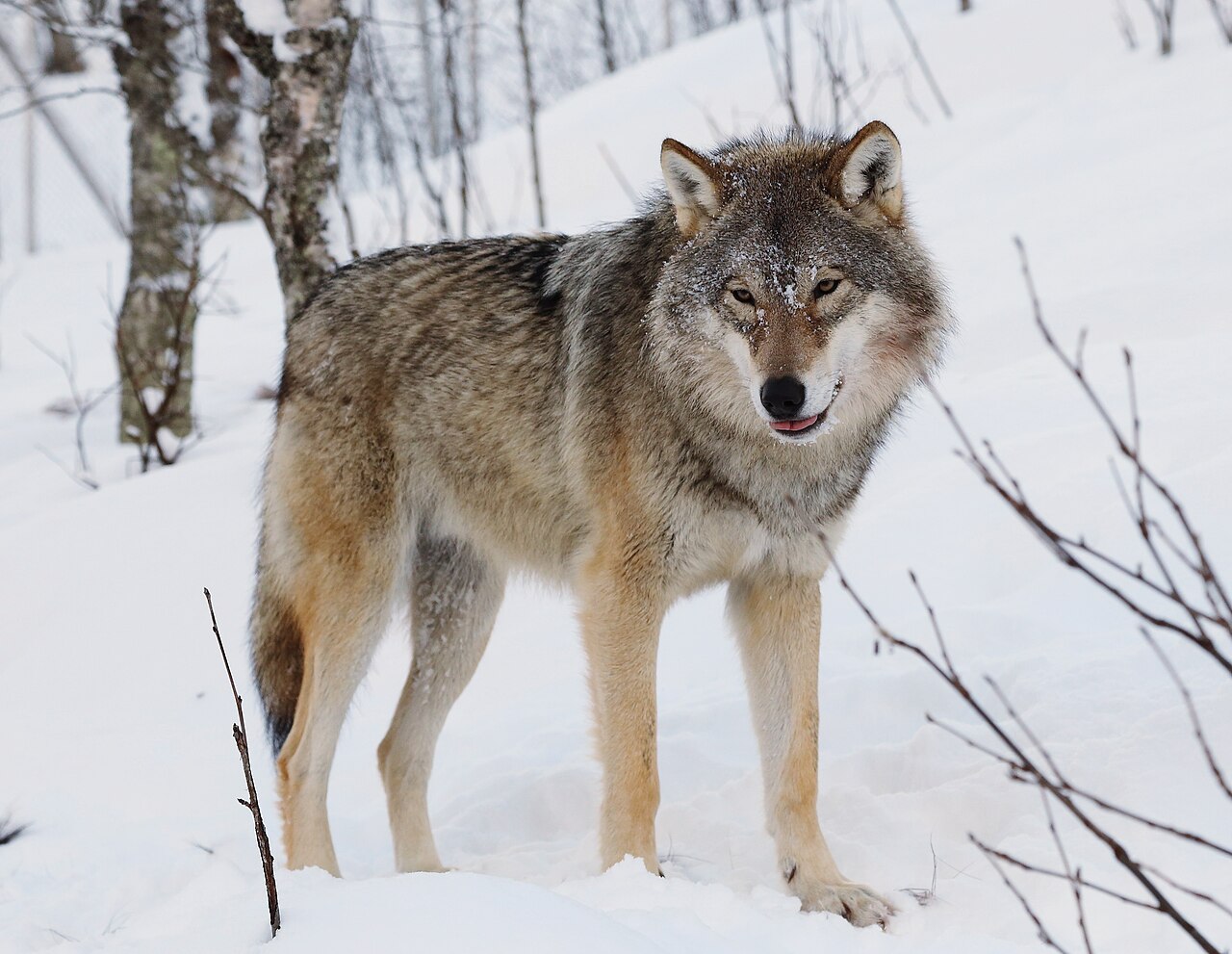
Wolves are apex predators requiring specialized multi-dog LGD teams. Through natural instinct and centuries of selective breeding, LGDs have developed specific tactics to handle this class of predator safely and effectively.
A landmark 6-year study using thermal imaging documented that 65% of LGD-wolf interactions were agonistic, and most occurred more than 100 meters from the flock. LGDs create a defensive buffer zone, not a wall around the sheep. French Alps Observation Study
Spiked Collars (Carlancas)
Many working dogs in wolf country wear heavy spiked collars to protect their throats during wolf engagements. These traditional collars, known as carlancas in Iberian traditions, have been used for centuries.
Tactical Implementation
An LGD's success relies heavily on the owner providing the right environment. Proper containment fencing, night penning, and providing backup when the dog elevates its warning bark are crucial elements of the defense matrix. With every additional dog, wolf predation rates decrease significantly — especially in nighttime corral attacks. (Soofi et al., 2022)
Pack vs. Team: Tactical Geometry
A solitary LGD cannot fend off a wolf pack. The wolves' cooperative hunting strategy — where pack members rotate lead positions to exhaust prey — requires an equally coordinated defense.
Sources: Landry et al. (2020); Wroe et al. (2005) Proc. Royal Society B; Rózycka et al. (2024) Animals; Espuno et al. (2004).
LGD vs. Molosser: The Jaw Mechanics Myth
A common misconception in the agricultural community is that Molosser-type guard dogs (e.g., Mastiffs, Rottweilers, Pitbulls) are superior for predator defense due to their reputation for "high bite force." While a short, brachycephalic jaw acts like a short-handled bolt cutter to spike a numerically higher PSI on a static bite sleeve, this morphotype fails catastrophically in wide-gape survival combat against an apex predator.
The TMJ Dislocation Risk
Recent CT scan morphometric studies (Paran et al., 2023) show that short-snouted dogs possess extremely shallow temporomandibular joint (TMJ) pits and lack a robust retroarticular process. If a Mastiff attempts a wide-gape bite on a violently twisting 100lb wolf, its jaw lacks congruency and is prone to debilitating lateral dislocation (luxation).
The Dolichocephalic Advantage
Authentic Livestock Guardian Dogs (like Kangals and Ovcharkas) are long-snouted (meso-dolichocephalic). This evolutionary architecture provides an incredibly deep, stable TMJ hinge and perfect alignment of the carnassial (shearing) teeth. An LGD sacrifices a trivial amount of point-blank bite PSI to gain a massive endurance grip and deep-tissue shearing functionality necessary to survive a wolf encounter.
Economic Reality
The stakes are real. In 2025, a single wolf pack (Beyem Seyo) in California's Sierra Valley was responsible for $2.6 million in damages over seven months — including 92 cattle killed and over $2 million in agency intervention costs. Despite 18,000 staff hours of non-lethal hazing, the attacks continued until four pack members were euthanized. (Saitone & Schohr, 2025, UC Giannini Foundation)