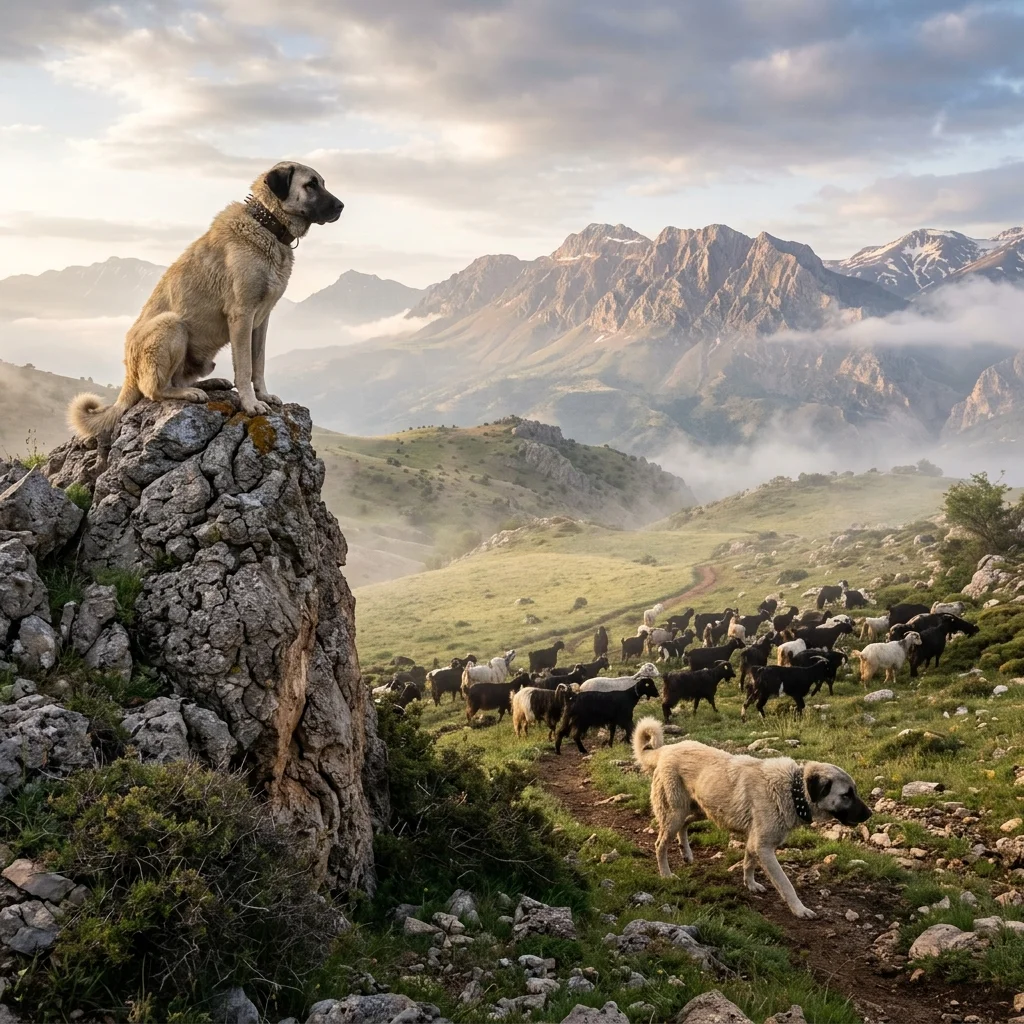
Why One LGD Is Often Not Enough
A single Livestock Guardian Dog is a formidable deterrent, but they have physical limitations. They can only be in one place at once, and they need to sleep. Solitary dogs dealing with heavy predator loads often suffer from burnout, injury, or simply getting outmaneuvered by packs of coyotes or wolves.
Multi-dog teams provide synergy?the combined effect is greater than the sum of the individual parts.
Coverage
One dog can patrol the fence while another stays with the flock. No gap in defense.
Safety
Predators are bullies. They will attack a single dog but will flee from a coordinated pack of three.
Mentorship
Older, experienced dogs teach puppies the ropes, reducing training time for new additions.
Pack Roles
In a well-established team, dogs often naturally adopt specific roles based on their temperament and age.
1. The Patroller (Perimeter Dog)
This dog tends to stick to the fencelines. They are the "First Alarm." They bark at threats far in the distance and actively mark the boundaries. They are often more independent and higher energy.
2. The Close Guard (Flock Dog)
This dog prefers to stay embedded within the herd. When the Patroller barks, the Close Guard gathers the stock into a tight group and stands between them and the threat. They are the last line of defense.
3. The Floater
In larger packs, "floaters" move between the perimeter and the stock, backing up whichever dog needs support. This dynamic fluidity allows the team to respond to threats from multiple directions.
Composition: Gender & Temperament
Building a pack isn't as simple as just adding another dog. You must consider the personalities and genders of the dogs involved to prevent internal fighting.
| Combination | Risk Level | Notes |
|---|---|---|
| Male + Female | Low | The gold standard. Opposite sex pairs generally get along best with the least conflict. |
| Male + Male | Moderate | Can work well, especially if neutered or if there is a significant age gap. Neutering helps reduce dominance aggression. |
| Female + Female | High | Use Caution. Same-sex female aggression ("bitch wars") is often severe and lifelong. Once two females decide they hate each other, they may never be safe together again. |
Spay/Neuter Note
Intact dogs (especially females in heat) can cause massive disruption to the pack dynamic. Unless you are an active breeder, altering your dogs (at the appropriate age) simplifies pack management.
Introducing a New Dog
Bringing a new LGD into an existing territory must be done carefully. The resident dog views the farm as their territory to defend?even against a new puppy.
-
Step 1: Neutral Ground
If possible, introduce the dogs on neutral territory (a neighbor's field, a park) first.
-
Step 2: Adjacent Pens
For the first few weeks, keep them separated by a secure fence. Let them sniff and get used to each other's presence without physical contact.
-
Step 3: Supervised Interaction
Allow short, supervised interactions. Walk them together on leashes. Praise calm behavior.
-
Step 4: The "Pack Walk"
Walking the perimeter together helps them bond as a working unit rather than competitors.