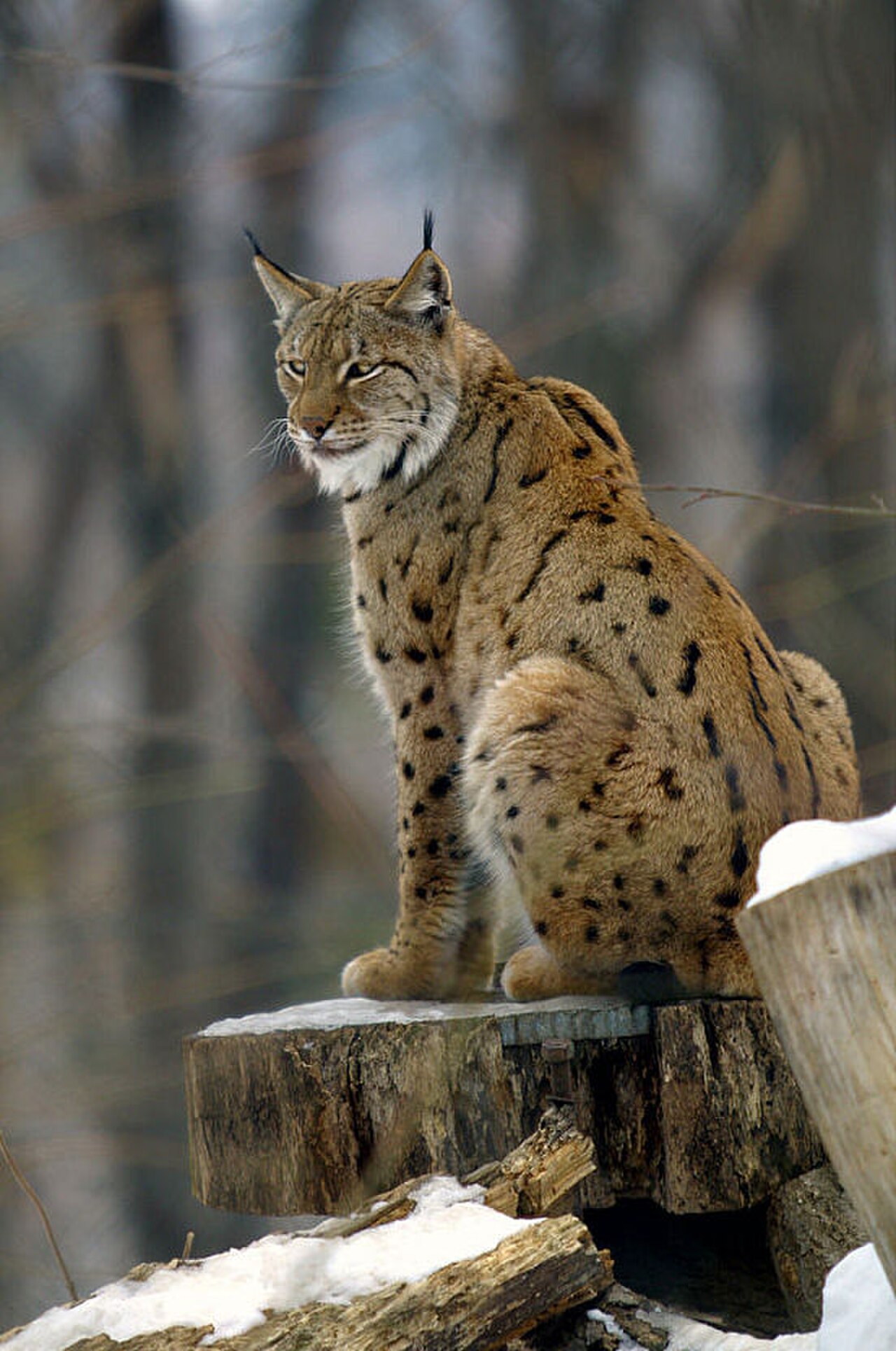
The Eurasian lynx (Lynx lynx) is the largest lynx species and a significant livestock predator across Europe — particularly in Scandinavia, the Carpathian Mountains, the Balkans, and Turkey. Unlike wolves that hunt in packs and can be deterred by LGD barking from a distance, the lynx is a solitary, silent ambush predator that stalks individual sheep or goats and kills with a single throat bite, often before any alarm can be raised. Multiple European LGD breeds — the Bucovina Shepherd, Carpathian Shepherd, and Mioritic Shepherd — were specifically developed to protect flocks against lynx alongside wolves and bears in the Carpathian Mountains of Romania.
Eurasian Lynx — Species Intelligence
Lynx lynxSolitary stalk-and-ambush — The lynx approaches silently, stalks to close range, then attacks with a short sprint and a killing bite to the throat. Natural prey: roe deer and hares (Cranial Matrix data). Will switch to unguarded sheep when available.
Strictly solitary — Outside of mating season and mother-kitten bonds, lynx are always alone. This means a single, alert LGD can be effective — there is no pack to run diversionary tactics. However, the lynx's stealth makes detection the primary challenge.
Crepuscular to nocturnal — Most hunting occurs at dawn, dusk, and through the night. Lynx rest during daytime in dense cover. This aligns with peak LGD patrol activity, but the lynx's extreme stealth means it can approach closer than most canid predators before being detected.
~200 PSI
Skull: 14–16 cm | vs. LGD: ~743 PSI
Strictly protected. Listed under Annex II/IV of the EU Habitats Directive. Killing a lynx is illegal in most European countries, even in defense of livestock. Compensation schemes exist in most countries. LGDs are the primary legal non-lethal deterrent.
Good — historically proven. Carpathian, Bucovina, and Mioritic Shepherds have coexisted with lynx for centuries. LGDs deter lynx through presence and scent-marking rather than direct confrontation. Lynx are risk-averse and will avoid areas with active LGD patrols.
40–66 lbs (18–30 kg) — Males are larger. Significantly bigger than a bobcat (Lynx rufus, 15–35 lbs) but still outweighed by most LGDs. The lynx's advantage is stealth, not size.
1–4 kittens per year — Single litter, breeding February–April. Kittens stay with the mother for approximately 10 months. Very slow population growth. Lynx populations are sensitive to poaching and habitat loss.
Largest range of any felid. From Western Europe to Siberia. Core European populations in Scandinavia (Norway/Sweden/Finland), the Carpathians (Romania), the Balkans, Turkey, and the Baltic states. Multiple reintroduction programs across Western Europe.
Males: 40–180 sq mi — Females: 20–100 sq mi. Extremely large home ranges. A single lynx can impact multiple farms across a wide valley. Territory boundaries are maintained through scent-marking and scraping.
The Breeds That Fight Lynx
The site's breed research database documents several LGD breeds that were specifically bred to deter lynx in their native habitats. These breeds share common traits: large size, extreme alertness, and the ability to work in groups to patrol wide territories.
- Bucovina Shepherd (Romania): “A courageous and combative guardian, bred to protect flocks from large predators like bears, wolves, and lynx. Its deep, powerful bark is an effective deterrent that can be heard from long distances.” (110–198 lbs)
- Carpathian Shepherd (Romania): “Specifically bred to protect livestock and property from large, effective predators in the Carpathian Mountains, including wolves, bears, lynx, and even armed outlaws. They often work in groups and will ‘call in the pack’ if a threat is detected.” (70–100 lbs)
- Mioritic Shepherd (Romania): “A courageous and efficient fighter, bred to protect livestock from large predators including bears, wolves, and lynx.” (88–143 lbs)
A notable pattern emerges: all three are Romanian breeds from the Carpathian Mountains, where brown bears, wolves, and Eurasian lynx coexist in the same landscape. These dogs evolved to handle a simultaneous three-predator threat matrix — a level of predator pressure that very few livestock systems on Earth can match.
Why Lynx Are Different from Other Predators
The lynx presents a unique challenge compared to canid predators (wolves, coyotes, jackals) and ursids (bears):
- Silent approach: Wolves and coyotes can be detected by their scent and sound from a distance. A lynx can approach a flock completely silently and kill before any alarm is raised. LGDs must patrol proactively, not just react to alerts.
- Single kill per event: Unlike wolves (which can cause surplus killing during frenzy) or feral dogs, a lynx typically kills one animal per event and returns to feed on the carcass over several days. This means losses accumulate slowly but steadily.
- No confrontation preference: Lynx are extremely risk-averse. They will almost always flee from an LGD rather than fight. This means the LGD's job is detection and presence, not physical combat. A lynx that smells LGD urine or hears distant barking will likely choose a different hunting ground.
- Terrain advantage: Lynx prefer forested, broken terrain with cover. In open pastures, they are at a disadvantage. In forested or mountainous grazing, they have significant ambush opportunities. This is why Carpathian LGDs traditionally patrol forest edges and ridge lines.
Lynx vs. Bobcat: Not the Same Threat
North American producers may assume their experience with bobcats applies to the Eurasian lynx. It does not:
- Size: A male Eurasian lynx (40–66 lbs) is nearly twice the weight of a large bobcat (15–35 lbs). The Eurasian lynx regularly takes roe deer (up to 66 lbs) — an adult sheep is well within its prey size range.
- Kill method: Both use a throat bite, but the Eurasian lynx has a larger skull (14–16 cm) and generates more bite force (~200 PSI). A bobcat rarely kills adult sheep; a Eurasian lynx does so regularly in Europe.
- Territory: A bobcat's territory is 5–30 sq mi. A male Eurasian lynx may range across 40–180 sq mi — meaning a single lynx can impact farms across an entire valley system.
Guardians.dog Breed Research Database — Elicit Comprehensive Comparison of 56 Livestock Guardian Dog Breeds (2026). Internal compilation of peer-reviewed breed profiles. [Bucovina: refs 6–10; Carpathian: refs 23–27; Mioritic: refs 164–168].
Carnivore Damage Prevention News No. 8, January 2005. European livestock herders and LGD use against wolves, bears, lynx, and cheetahs. LCIE/SSC publication.
Guardians.dog Interactive Cranial Matrix — Eurasian Lynx (Lynx lynx) skull model from Mammal Research Institute PAS, Poland. Licensed under CC-BY 4.0.
Guardians.dog Ecological Regions dataset (2026). Balkans region: apex predators listed as Eurasian Brown Bear, Balkan Lynx, Wolf.