Raptors — particularly golden eagles, red-tailed hawks, and great horned owls — are among the few predators that LGDs cannot directly combat. Aerial attacks happen fast, and a ground-bound dog has limited ability to intercept a raptor in a dive. However, LGD presence does provide significant indirect protection by keeping vulnerable animals grouped and deterring raptors from low-altitude approaches.
Key Takeaways
- Aerial Limitations: Eagles, hawks, and owls represent aerial threats that ground-bound LGDs cannot directly combat. They must rely on indirect deterrence and keeping livestock grouped.
- Species Specifics: Golden eagles target lambs/kids and kill via talon puncture; Hawks target poultry via perch-and-dive during the day; Great Horned Owls operate nocturnally.
- Federal Protection: All raptors are protected by federal law (Migratory Bird Treaty Act and/or Eagle Protection Act). Non-lethal deterrence, overhead netting, and covered shelters are the only legal and effective mitigation strategies.
Birds of Prey (Raptors) — Species Intelligence
Golden Eagles, Hawks, Great Horned OwlsDive from altitude — Golden eagles strike at 100+ mph targeting head/neck with talons. Hawks perch-and-dive. Owls approach silently at night. All target isolated, separated animals.
Solitary or mated pairs — Raptors hunt alone. A successful hawk will return daily until deterred. Golden eagles may form loose aggregations at prey-rich areas during non-breeding season.
Eagles/Hawks: Daytime. Owls: Nocturnal. — Hawks hunt from dawn to midday. Eagles prefer thermals (mid-morning). Great horned owls are active dusk through dawn — the primary nocturnal raptor threat.
Limited
Cannot intercept aerial dives — indirect deterrence only
MBTA + Eagle Protection Act. Illegal to kill, trap, or harass without federal permit. Non-lethal deterrents only. Wyoming reports 3,400 sheep/lamb losses to eagles annually.
Lambs, kids, poultry, rabbits — Eagles take newborn lambs/kids in first weeks. Hawks take chickens/ducks. Owls take poultry (often decapitating).
Eagles: 6–15 lbs (6–7 ft wingspan). Hawks: 1.5–3.5 lbs. Great Horned Owls: 2–5.5 lbs. Small individually, but talon strike force is devastating.
1–3 eggs per year — Single clutch. Eagles: Feb–April. Hawks: March–June. Owls: Jan–March (earliest breeder). Low reproduction means populations grow slowly but are resilient.
Continental. Red-tailed hawks are the most common raptor in North America. Golden eagles concentrate in western rangeland. Great horned owls are found in every U.S. state. Populations are generally stable or increasing.
Eagles: 20–60 sq mi — Hawks: 0.5–2 sq mi. Owls: 1–5 sq mi. Raptors defend nesting territories aggressively but range widely for hunting.
Golden Eagles

Golden eagles are the most significant raptor threat to livestock. They primarily prey on lambs and kid goats in the first weeks of life, killing by puncturing the skull or neck with their talons. Wyoming alone reports 3,400 head of sheep/lamb losses attributed to eagles annually.
- Weight: 6–15 lbs with a 6–7 foot wingspan
- Kill method: Dive from altitude, striking the head/neck with talons
- Peak risk: Spring lambing/kidding season in western rangeland
- USDA data: Eagles accounted for 3.7% of lamb predator-caused deaths (4,971 lambs in 2014)
Hawks (Red-tailed, Cooper’s, Goshawk)

Hawks primarily target poultry — chickens, ducks, and game birds. Attacks occur during daylight hours, typically from a perch position. Smaller hawks like Cooper’s hawks specialize in taking birds from free-range flocks.
- Targets: Chickens, bantams, ducks, young turkeys
- Pattern: Perch-and-dive from trees or posts near the coop area
- Repeat behavior: A hawk that successfully takes a chicken will return daily until deterred
Great Horned Owls

Great horned owls are the primary nocturnal raptor threat to poultry. They kill with silent approaches and can enter open or poorly secured coops. They typically take one bird per night and may decapitate the prey.
- Active hours: Dusk through dawn. Peak at early morning darkness.
- Kill sign: Missing head, clean plucking of breast feathers at a “plucking post”
- Counter: Close and secure coops before dusk. Hardware cloth over all openings.
LGD Limitations Against Aerial Predators
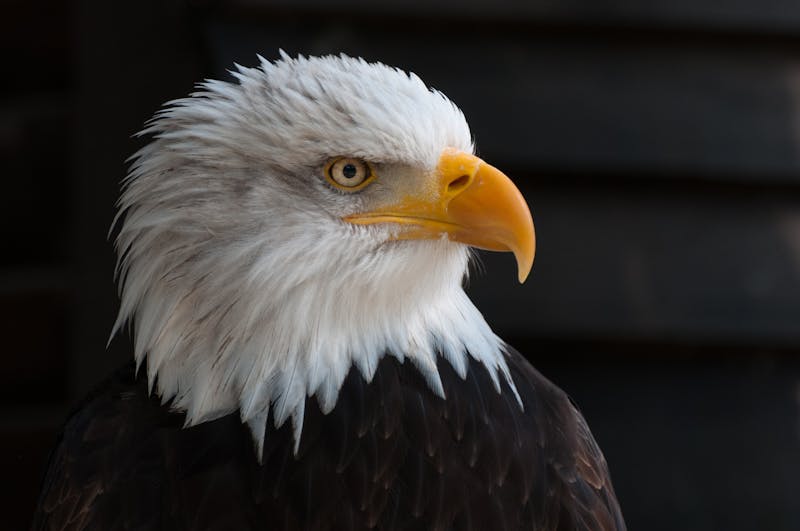
This is one of the few predator categories where LGDs have limited direct effectiveness:
- Cannot intercept: A golden eagle diving at 100+ mph cannot be caught or blocked by a dog
- Indirect deterrence: LGD presence keeps livestock grouped tightly, making individual animals harder to target. Eagles prefer isolated, separated animals.
- Visual deterrent: A large white LGD standing near lambs makes raptors less likely to attempt a low-altitude approach. The dog’s presence creates uncertainty about risk.
- Poultry LGDs: Some LGDs bond closely with free-range poultry flocks and stay physically with the birds under cover. Their presence alone deters most hawks from approaching.
Effective Protection Strategies
| Strategy | Effectiveness | Best For |
|---|---|---|
| Overhead netting/wire | EXCELLENT | Poultry runs, small pastures, lambing pens |
| Covered shelters | EXCELLENT | All livestock during peak raptor hours |
| LGD presence | MODERATE | Keeping flocks grouped, deterring low approaches |
| Reflective tape/flagging | MODERATE | Temporary deterrent (habituates in weeks) |
| Supervised free-range | GOOD | Only releasing poultry when you or dogs are present |
Phillips, R. L., & Blom, F. S. (1988). Distribution and magnitude of eagle/livestock conflicts in the western United States. Proceedings of the Vertebrate Pest Conference, 13, 241–244.
Avery, M. L., & Cummings, J. L. (2004). Livestock depredations by black vultures and golden eagles. Sheep & Goat Research Journal, 19, 58–63.
USDA APHIS. (2015). Sheep and lamb predator death losses, 2015. NASS.
Wyoming Game & Fish Department. (2023). Livestock loss to predators summary.
USFWS. (2022). Eagle management guidelines. U.S. Fish and Wildlife Service.
Hygnstrom, S. E., et al. (1994). Prevention and Control of Wildlife Damage. University of Nebraska.