LGDs interact with their environment far more intensely than pet dogs. They patrol perimeters, occasionally engage with predators, and sniff or scavenge areas where wild canids have roamed. Environmental and infectious pathogens persist in the soil or are transferred via direct contact with these wild animals.
REVERSE SPILLOVER: The LGD as a Wildlife Threat
We often think of wildlife as a disease risk to our dogs, but modern conservation epidemiology proves the inverse is incredibly dangerous. Unvaccinated farm dogs placed in rural borders or near protected reserves act as biological payloads. They shed massive viral loads of Canine Parvovirus (CPV) and Distemper into the environment, actively threatening native predators like wolves, lynx, and bears. Vaccinating your LGD is not merely about dog health—it is a critical requirement for global biosecurity and wildlife conservation.
Rabies (Rabies lyssavirus)
Rabies
Vector: Direct bite or exchange of saliva with infected wildlife (raccoons, skunks, foxes, coyotes, bats).
For a dog actively fighting predators at night, rabies exposure is a very real occupational hazard. Rabies is a fatal viral encephalitis that attacks the central nervous system.
Symptoms:
- Furious Stage: Heightened aggression, pica (eating strange objects), extreme agitation, and fear of water (hydrophobia).
- Paralytic Stage: Difficulty swallowing, excessive drooling, muscular paralysis starting at the bite location and spreading, eventually leading to coma and death.
Veterinary Diagnosis & Care:
Rabies is a fatal, reportable disease concern that requires immediate veterinary and public health guidance. The disease is nearly 100% fatal once clinical symptoms begin. Accurate diagnosis can only be legally performed post-mortem by analyzing brain tissue.
Canine Distemper (Carré’s disease)
Canine Distemper CROSS-SPECIES THREAT
Vector: Highly contagious aerosolized droplets, bodily secretions, or direct contact with infected raccoons, foxes, and unvaccinated stray dogs.
Due to the aggressive vaccination of domestic pets, Canine Distemper Virus (CDV) is often erroneously considered a "solved" disease. It is not. For farm dogs, CDV is a catastrophic neurological pathogen. Epidemic modeling shows that while typical US shelter positivity sits around 23.5%, unvaccinated working dog populations in rural areas face up to 90% seroprevalence and constant exposure from raccoons, skunks, and coyotes.
Global Spillover Mutations:
CDV is notorious for mutating its viral SLAM-receptor to jump outside of canines. Historically, unvaccinated domestic dogs triggered a devastating CDV spillover that wiped out 35% of the entire Serengeti lion population. The virus has also successfully jumped to marine mammals (Phocine distemper) and primates. Allowing your LGD to remain unvaccinated turns your farm into a viral launchpad for ecological collapse.
Symptoms & Progression:
- Stage 1 (Respiratory/GI): High fever, lethargy, watery discharge from eyes/nose that turns mucopurulent. Coughing, vomiting, and diarrhea.
- Stage 2 (Neurological): Over several weeks, the dog may develop muscle twitching, localized seizures (often "chewing gum" seizures involving the jaw), circling behavior, and partial paralysis.
- Physical Marker: Known as "hard pad disease," distemper often causes extreme thickening/hyperkeratosis of the footpads and nose.
Veterinary Diagnosis & Care:
Diagnosed via PCR testing of swabs. Like parvovirus, some infections may not have a simple resolution and often require urgent veterinary-directed supportive care. The mortality rate is 50–90%, and survivors often suffer lifelong, debilitating neurological tics. It is a core vaccine (the "D" in DHPP).
Infectious Canine Hepatitis (Adenovirus 1)
Infectious Canine Hepatitis
Vector: Direct oronasal contact with the urine, feces, or saliva of infected dogs or wild canids.
Caused by Canine Adenovirus 1 (CAV-1), this severe viral disease primarily attacks the liver, kidneys, and blood vessels. Unvaccinated dogs roaming large rural properties or interacting with stray dogs face enormous risk, as the virus can survive for months in the environment outside of a host.
Symptoms:
- Fever, extreme depression, and loss of appetite.
- Abdominal pain (the dog may have an arched back or guard its belly) with vomiting and diarrhea.
- "Blue Eye": Corneal opacity occurring 1-3 weeks during or after recovery in some dogs.
- Bleeding disorders due to liver failure, presenting as small hemorrhages (petechiae) on the gums.
Veterinary Diagnosis & Care:
Mortality can range from 10-40%. Hyperacute cases in puppies can cause death within hours. Severe systemic infections may need intensive veterinary supportive care, including monitoring and stabilization. Due to high working dog exposure, it is a core vaccine (part of DHPP combo).
Enteropathogenic Bacteria (Soil-Loading)
Salmonella, Campylobacter & Clostridium spp.
Vector: Ingestion of contaminated soil, raw livestock feces, or carcass material.
Working dogs operating in dense agricultural environments are constantly exposed to environmental loading of enteropathogenic bacteria. While domestic dogs often suffer severe acute gastroenteritis from these pathogens, LGDs frequently act as asymptomatic carriers. Heavy microbial loading in the soil around feeding areas and water troughs can lead to sudden, severe hemorrhagic diarrhea (Clostridial overgrowth) when a dog's immune system is stressed.
Veterinary Diagnosis & Care:
Severe infectious illness may require veterinary supportive care, monitoring, hydration support, and stabilization: IV fluids, broad-spectrum antibiotics, and anti-emetics.
Tetanus (*Clostridium tetani*)
Tetanus (Lockjaw)
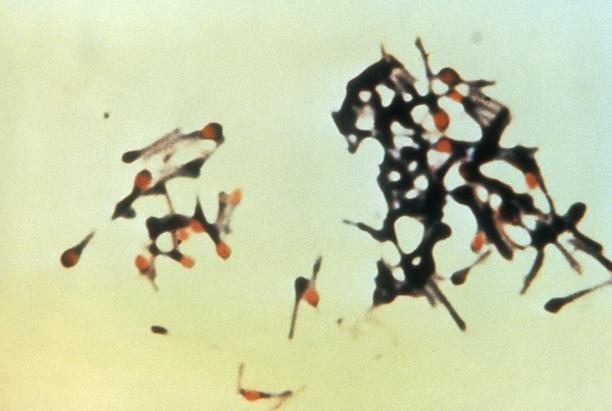
Source: Wikimedia Commons
Vector: Deep puncture wounds contaminated by soil or rusty metal.
While dogs are significantly more resistant to tetanus than humans or horses, farm dogs are at high risk for the exact type of injuries that breed the bacteria: deep punctures from rusty barbed wire, predator bites, or stepping on nails around old barns. Clostridium tetani spores live in the soil and thrive in deep wounds devoid of oxygen, where they release a powerful neurotoxin.
Symptoms & Progression:
- Early stage: Stiffness in the limb where the wound occurred, progressing to facial muscle spasms (often pulling the ears back and lips tight into a "sardonic smile").
- Advanced stage: The classic "sawhorse stance" where all four legs lock rigidly. The dog will be unable to bend its joints or open its mouth (lockjaw). Sensitivity to light and sound becomes extreme.
Veterinary Diagnosis & Care:
Tetanus is a serious medical emergency that requires immediate veterinary care and intensive professional management.