Toxins are a primary threat to farm dogs. Whether from malicious neighbors tossing bait over the fence, accidental ingestion of farm fertilizers and rodenticides, or triggering predator-control devices like M-44s, poisoning is an absolute veterinary emergency. Time is tissue. Always bring the suspected packaging or toxic material to your vet.
A consultation fee may apply, but this hotline can tell your vet exactly what antidote to use while you are en route to the clinic. Program this number into your phone.
Intentional & Malicious Poisoning (Baits)
Xylitol (Artificial Sweetener)
Source: Wikimedia Commons
Commonly used in: Intentional malicious baiting (laced into hotdogs or ground beef), sugar-free gum, peanut butter.
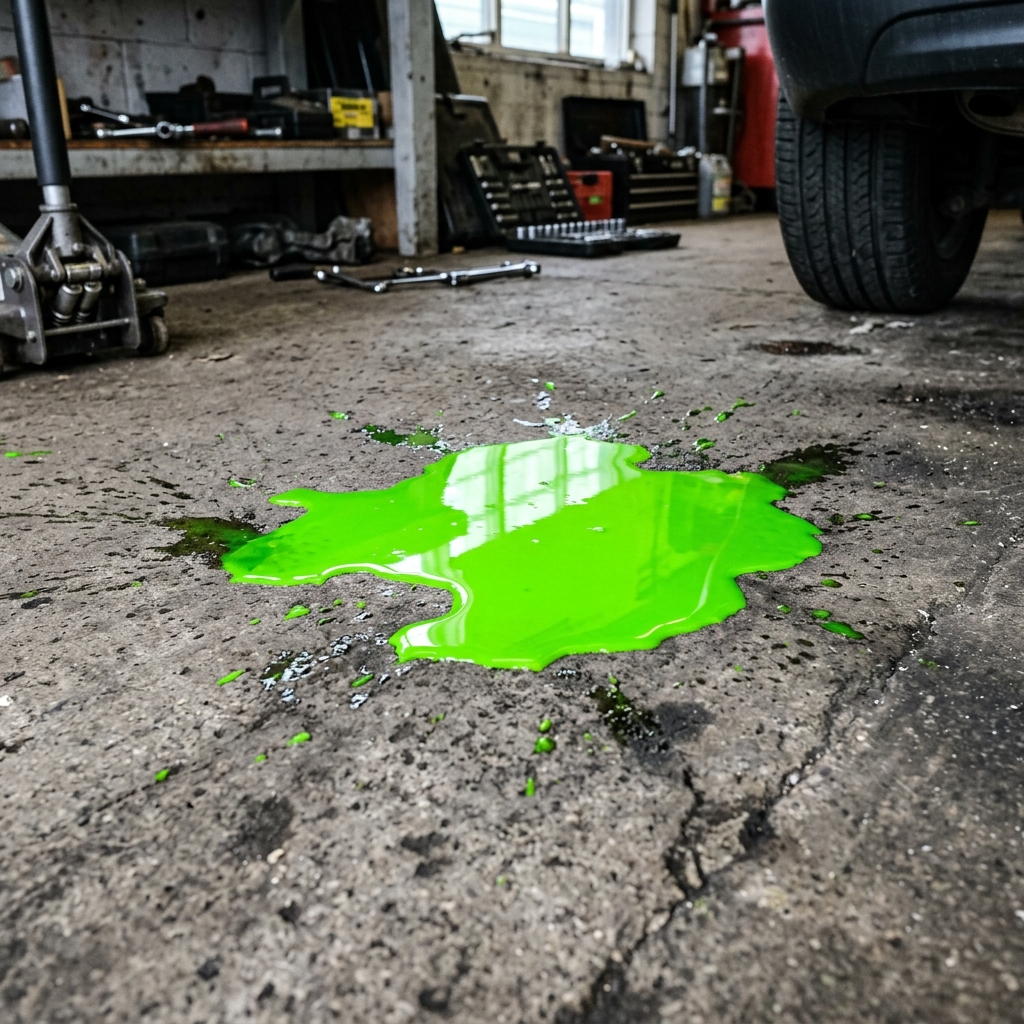
Ethylene Glycol (Antifreeze)
Simulated Clinical Image
Commonly used in: Both accidental garage spills and malicious poisoning (it tastes sweet to dogs). It is rapidly absorbed.
Strychnine
Commonly used in: Gopher bait and illegal predator baiting (to kill wolves or coyotes). It causes the nervous system to lose all inhibitory control.
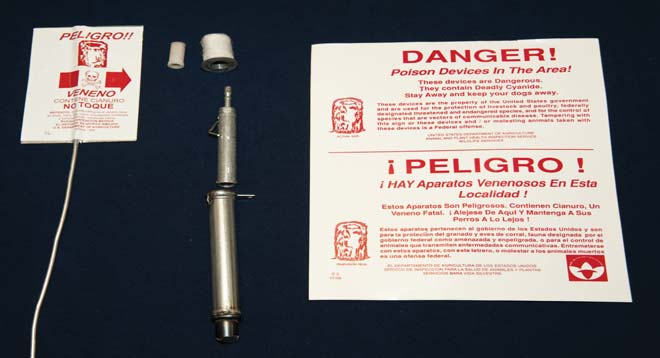
Sodium Cyanide (M-44 Devices)
Source: Wikimedia Commons
Commonly used in: M-44 devices ("cyanide bombs") placed by government agencies or ranchers for coyote/wolf control. The dog bites the scented bait cap, triggering a spring that shoots cyanide powder into the dog's mouth.
Accidental Farm Chemicals & Rodenticides
Rodenticides (Rat/Mouse Poison)
Source: Wikimedia Commons
Farm dogs often ingest bait directly from barns or via secondary poisoning (eating a poisoned rodent—see our Scavenging page). You MUST bring the bait box to the vet. The treatments are entirely different.
- Anticoagulants (Brodifacoum, Diphacinone): Stops blood clotting. Signs: Unexplained bruising, coughing blood, pale gums (Onset: 3-5 days). Recovery from serious poisoning may require ongoing veterinary oversight and extended supportive care.
- Bromethalin: Causes brain swelling. Signs: Tremors, paralysis, seizures (Onset: hours). No antidote exists. Suspected poisoning should be handled urgently by a veterinarian or poison control resource, because safe next steps depend on the toxin, timing, and the dog’s condition.
- Cholecalciferol (Vitamin D3): Causes massive calcium spikes leading to acute kidney failure. Signs: Increased urination/thirst, lethargy, vomiting. Suspected poisoning should be handled urgently with veterinary or poison-control guidance, because safe care decisions depend on the toxin, timing, symptoms, and the dog’s condition.
Organophosphates / Insecticides
Commonly used in: Crop dusting, heavy agricultural insecticides, and some older flea/tick dips.
Lead Toxicosis
Commonly used in: Old tractor batteries dumped in pastures, lead paint peeling from old barns, roofing materials, and shotgun pellets.
Toxic Pasture Plants
While most LGDs do not "graze", bored adolescents or dogs scavenging may ingest highly toxic plants growing along fence lines or in ornamental landscaping near barns.
Water Hemlock & Poison Hemlock
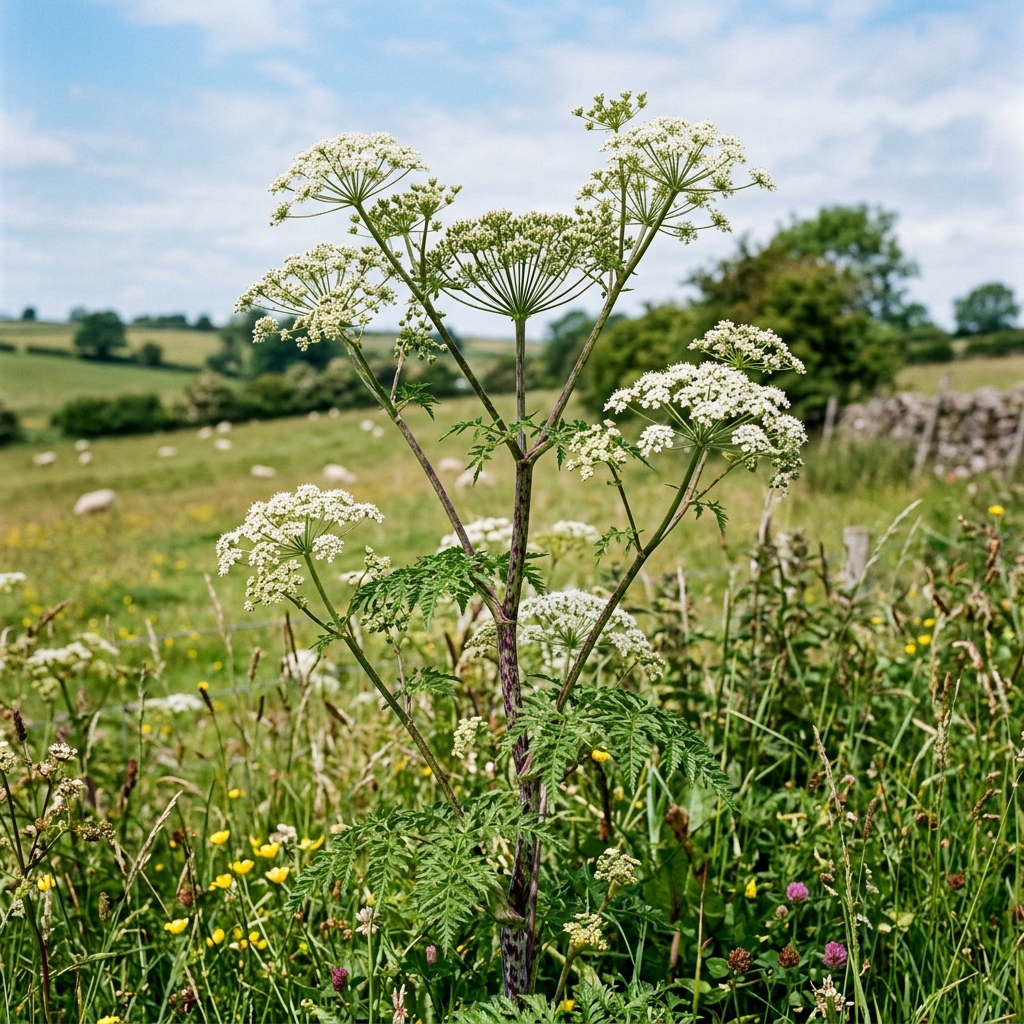
Simulated Clinical Image
Often found in wet pastures or along ditches. Hemlock contains cicutoxin (Water Hemlock) or coniine (Poison Hemlock).
Oleander
A common ornamental shrub in warmer climates. All parts are highly toxic. Contains cardiac glycosides causing severe arrhythmias (irregular heartbeat), vomiting, and sudden death.
Sago Palm
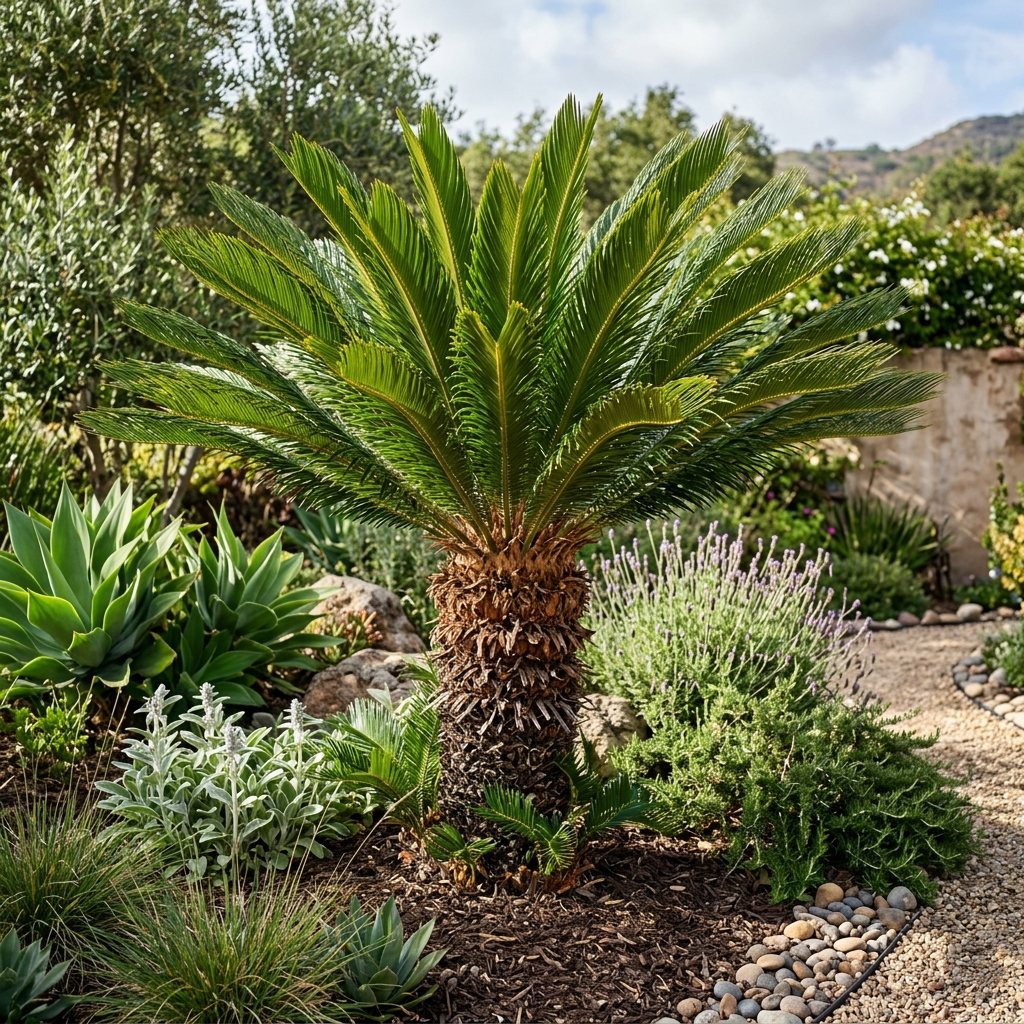
Simulated Clinical Image
Found primarily in the Southern US. Contains cycasin, which causes devastating acute liver failure. The seeds ("nuts") are the most toxic part.
Carcass Scavenging Toxicoses
Livestock guardian dogs naturally scavenge. When they ingest rotting carcasses, raw fish, or diseased wildlife, they are at risk for specific bacterial toxicoses. Early recognition of these syndromes is critical.
Botulism (Carrion Toxicity)
Commonly caused by: Ingestion of pre-formed botulinum toxin in rotting carcasses (especially dead poultry or waterfowl) or spoiled meat.
Salmon Poisoning Disease
Commonly caused by: Eating raw or improperly cooked fish containing rickettsia-infected flukes, or swimming in contaminated waters.
Tularemia ("Rabbit Fever")
Commonly caused by: Contact with or ingestion of infected wild rabbits, rodents, or tick bites.
Blue-Green Algae (Cyanotoxins)
Cyanobacteria Bloom Toxicosis
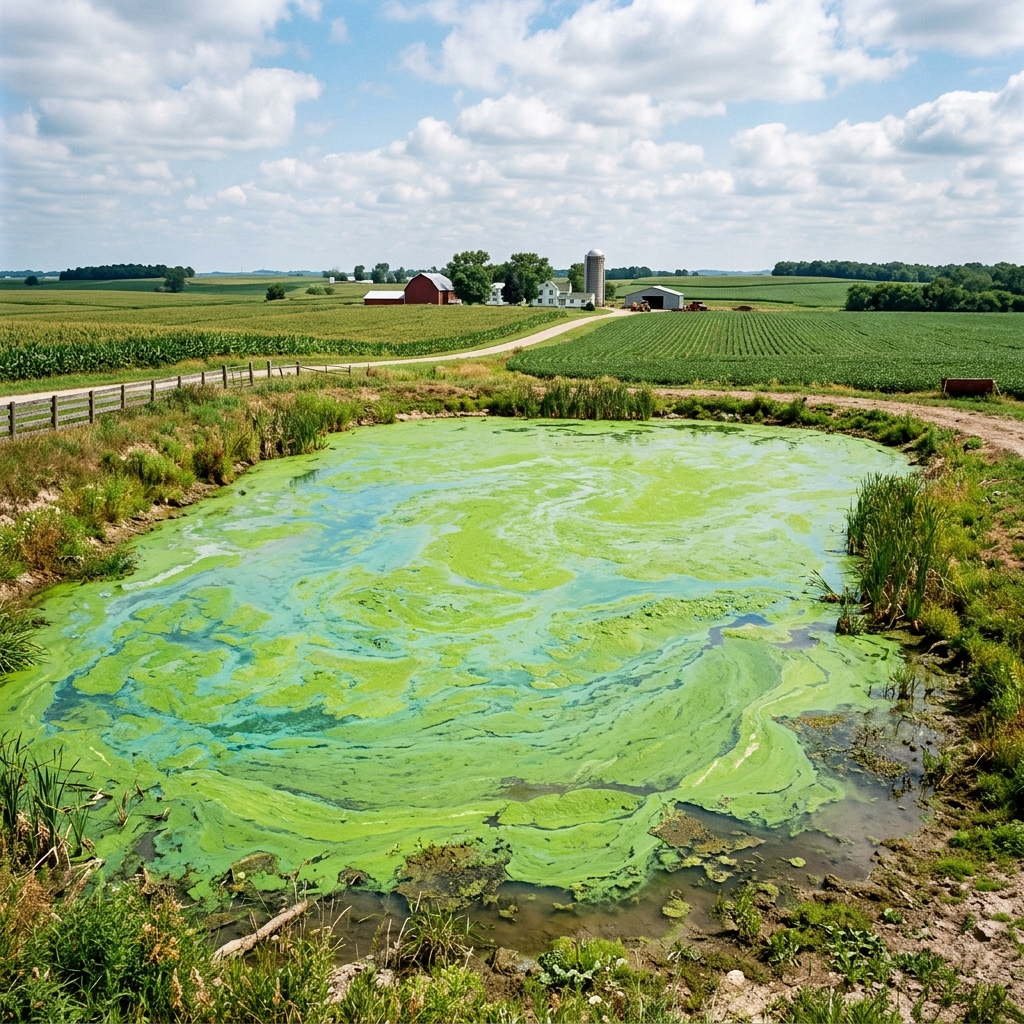
Simulated Clinical Image
Where it occurs: Stock ponds, farm dams, irrigation reservoirs, and slow-moving creeks during hot weather (June–October). LGDs are at extreme risk because they drink from the same water sources as livestock.
Prevention: Fence off any pond or trough with visible green scum, foam, or paint-like surface film. Provide clean, aerated water sources. Test suspect water with commercial cyanotoxin strip tests during bloom season.
Predator-Control Poisons
In addition to M-44 cyanide devices (covered above), LGDs face secondary and direct exposure to poisons deployed for predator and pest management:
Sodium Fluoroacetate (Compound 1080)
Where it occurs: Legal in Australia and New Zealand for wild dog/dingo control; banned in the US since 1972 but historically used in predator control. Dogs may encounter legacy baits or illegally sourced material. Also used in some South American countries.
Zinc Phosphide (Gopher/Mole Bait)
Where it occurs: Widely used on farms and ranches for burrowing rodent control. Dogs may eat bait pellets directly or ingest poisoned gophers (secondary toxicity).
Emergency Emesis Reference
If your vet or ASPCA Poison Control directs you to induce vomiting at home, use 3% hydrogen peroxide only:
| Dog Weight | Hydrogen peroxide use for dogs should only be discussed with a veterinarian or poison control resource, because product strength, timing, and individual risk factors matter. | Notes |
|---|---|---|
| 40–60 lb | 20–30 mL (4–6 tsp) | 1 mL per pound, max 45 mL total |
| 60–90 lb | 30–45 mL (6–9 tsp) | Hydrogen peroxide use for dogs should only be discussed with a veterinarian or poison control resource, because product strength, timing, and individual risk factors matter. |
| 90–150+ lb (LGD range) | 45 mL maximum (9 tsp / 3 Tbsp) | Do NOT exceed 45 mL even for giant breeds. May repeat once after 15 min if no vomiting. |
Farm Chemical Storage Protocol
Preventing poisoning exposure is safer and less costly than responding after a dog is already ill. Implement these storage protocols on every farm with LGDs:
- Lock all chemicals: Rodenticides, fertilizers, herbicides, and antifreeze must be stored in locked metal cabinets or rooms — not open barn shelves.
- Bait station audit: Use tamper-resistant bait stations only. Audit all stations monthly. Map every station location and ensure LGDs cannot access them.
- M-44 awareness: If your property borders BLM or USDA Wildlife Services land, request a map of all M-44 placements. Mark them on your property map and fence accordingly.
- Algae monitoring: Test stock ponds weekly during summer. Post warning signs near suspect water. Provide alternative clean water.
- Neighbor notification: Inform adjacent property owners that you have working dogs on-site. Many malicious poisonings result from misunderstandings about dog activity near property lines.
Diniz, P. P. (2020). Salmon Poisoning Disease. Clinical Small Animal Internal Medicine.
Ensley, S., & Fritz, S. Blue-Green Algae & Cyanotoxins.
Farrow, B., et al. (1983). "Type C botulism in young dogs." Australian Veterinary Journal.
Kwit, N. A., et al. (2020). "Francisella tularensis infection in dogs: 88 cases (2014-2016)." Journal of the American Veterinary Medical Association.
Sykes, J. E., et al. (2010). "Salmon poisoning disease in dogs: 29 cases." Journal of Veterinary Internal Medicine.