Because LGDs operate globally—and are frequently imported from Eurasia to North America—owners must navigate conflicting international vaccination schedules. While the USA adheres to the AAHA guidelines and Europe follows WSAVA, primary export countries like Turkey and Russia operate under their own legal and epidemiological frameworks.
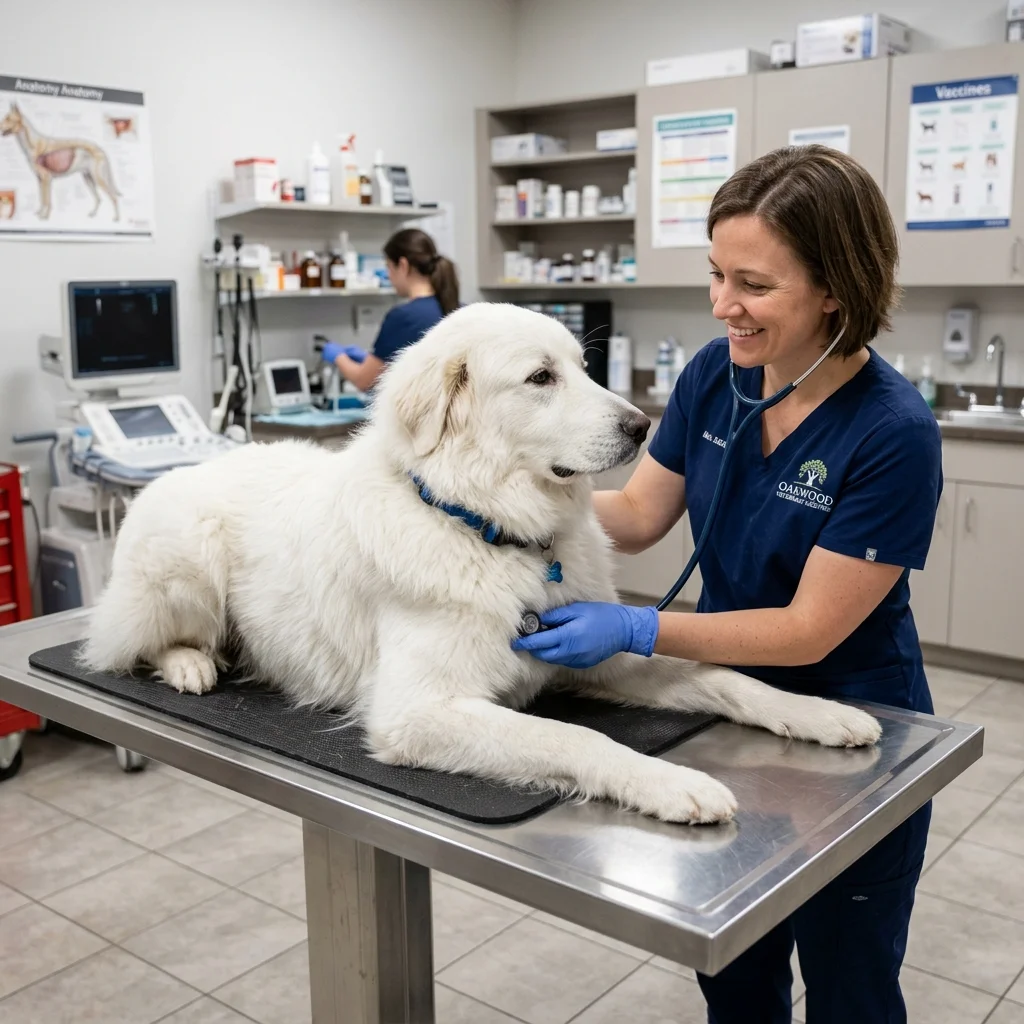
Core Pathogen Risks & Guardian Vulnerabilities
The "Core" diseases are highly contagious, severe, and distributed globally. The World Small Animal Veterinary Association (WSAVA) and AAHA classify them as essential for every dog.
Canine Parvovirus (CPV-2)
- The Threat: A highly resilient virus (surviving >1 year in the environment) causing severe hemorrhagic gastroenteritis. Untreated mortality is massive in puppies.
- Variant Shifts: Global surveillance shows the CPV-2c variant is increasingly dominant (from Italy to Asia and South America). Modern core vaccines remain cross-protective, but gaps in the puppy series are fatal.
- LGD Risk Factor: Endemic environmental exposure. LGDs live where the virus is impossible to eliminate (pastures, barns), increasing the risk if maternal immunity drops before the final puppy vaccine.
Canine Distemper Virus (CDV)
- The Threat: An aerosolized virus causing systemic illness and severe neurological damage (seizures, paralysis) with a 50-90% mortality rate.
- LGD Risk Factor: Exposure to infected wild carnivores (coyotes, foxes) and free-roaming community dogs. Outbreaks frequently occur at the wildlife-domestic interface where LGDs work.
Rabies
- The Threat: Near 100% fatal zoonotic virus transmitted via saliva/bites.
- LGD Risk Factor: Frequent physical combat with rabid predators (foxes, skunks, raccoons, wolves).
Global Vaccination Schedule Discrepancies
Veterinary protocols vary dramatically by region, largely driven by differing infectious pressures and legal mandates. Understanding these differences is critical when importing an LGD.
| Vaccine | USA (AAHA) | Europe (WSAVA) | Eurasia (Turkey / Russia) |
|---|---|---|---|
| Core Series (CPV, CDV, CAV) | Start 6-8w Every 2-4w until 16w. Booster at 1yr, then every 3 years. |
Start 6-8w Every 2-4w until 16w. Booster at 6mo/1yr, then every 3 years. |
Start 6-8w Turkey typically gives 2 doses (8w, 11w). Included in mandatory annual booster. |
| Rabies | Vaccination timing should be determined with a veterinarian based on the individual dog, region, and disease risk Booster at 1yr. Subsequent 1 or 3-year intervals per local law. |
Vaccination timing should be determined with a veterinarian based on the individual dog, region, and disease risk Booster at 1yr. 3-year intervals accepted for domestic travel. |
Strict Annual Turkey & Russia require strict annual revaccination. 3-year vaccines are generally not accepted for export. |
| Leptospirosis | Non-Core Recommended based on risk (water/rodents). |
Non-Core Risk-based, but widely used. |
Essential Included in annual boosters and legally required for export/travel. |
| Lyme Disease | Non-Core Endemic regions only. |
Non-Core Endemic regions only. |
Optional Risk-based in Turkey; "additional" in Russia. |
Non-Core Vulnerabilities for Working Dogs
While "Non-Core" implies optional for house pets, the unique lifestyle of an LGD elevates the necessity of several vaccines:
- Leptospirosis: Transmitted via urine-contaminated water and rodent reservoirs. Because LGDs frequently drink from ponds, puddles, and livestock troughs, they are at exceptionally high risk. In regions like Croatia and South America, Leptospira seroprevalence is exceptionally high (over 35%).
- Canine Infectious Respiratory Disease Complex (CIRDC / Kennel Cough): While not typically fatal, Bordetella and Parainfluenza spread rapidly in high-density environments. LGDs are at risk during transport, boarding, or when aggregated in large working packs. Intranasal/oral mucosal vaccines provide the fastest onset of local immunity.
Recommended LGD Vaccination Schedule
The following schedule synthesizes WSAVA 2024 guidelines with LGD-specific risk factors. Because LGDs live outdoors at the wildlife-domestic interface, they require more aggressive puppy series timing and broader non-core coverage than house pets.
| Age | Vaccines | Notes |
|---|---|---|
| 6–8 weeks | Core combo (CDV/CAV/CPV) | Initial vaccination timing should be determined with a veterinarian based on the dog, region, age, and disease risk. Begin puppy series. |
| 8–10 weeks | Leptospirosis vaccination timing should be determined with a veterinarian based on the dog, region, and disease risk | Start lepto series per product label. Critical for LGDs drinking from ponds/troughs. |
| 10–12 weeks | Core combo #2 + Lepto #2 | Every 2–4 weeks until 16–20 weeks. |
| 12–16 weeks | Rabies + Core combo #3 | Rabies per local law (usually ≥12 weeks). Critical for LGDs that fight wildlife. |
| 16–20 weeks | Core combo #4 (high-risk areas) | WSAVA recommends extending to 20 weeks in high-risk environments. A veterinarian may use vaccine titer testing or other follow-up evaluation when there is concern about immune response after vaccination. |
| 26 weeks | Optional booster or serology | For high-risk puppies, vaccination follow-up should be discussed with a veterinarian based on age, exposure risk, regional disease pressure, and individual health factors. |
| 1 year | Core booster + Rabies booster + Lepto annual | All dogs. Lepto requires annual boosting (short DOI). |
| Annually | Lepto + Rabies (if 1-yr product/law) | Lepto always annual. Rabies per local regulation. |
| Every 3 years | Core combo + Rabies (if 3-yr product) | WSAVA: core vaccines no more frequently than every 3 years after 1-year booster. |
Global Seroprevalence Data
Understanding regional disease burden helps prioritize vaccination and quarantine protocols, especially for imported LGDs:
| Disease | Region | Seroprevalence / Finding |
|---|---|---|
| CPV | Cuba (Boyeros) | 95.63% seroprevalence |
| CPV | Nepal (Chitwan) | 33% overall |
| CPV-2c | India (multiple states) | Broadly distributed across Tamilnadu, Telangana, others |
| CDV | Chile | 52% overall (36–80% by site) |
| CDV | Mexico | 62% seropositive (free-roaming dogs higher) |
| CDV | Brazil (Santa Maria) | 27.3% |
| CAV | Turkey (Konya) | 96.1% — rural working dogs, poor vaccination coverage |
| CCoV | Brazil (Santa Maria) | 50.4% |
| Leptospirosis | Global (South America/Asia) | 9.1% (Chile) to 75% (Ecuador Amazonia) |
| Leptospirosis | Pakistan (Punjab) | 21.4% |
| Ehrlichia | South Korea | 12% (outdoor dogs) |
| Anaplasma | South Korea | 15.6% (outdoor dogs) |
Import Vaccination Protocols
When importing an LGD from Turkey, Russia, or Central Asia, be aware of these critical discrepancies:
- Rabies titer testing: USDA/APHIS requires a FAVN rabies titer ≥0.5 IU/mL for dogs from CDC high-risk countries. This test must be performed at an approved lab, with results taking 2–4 weeks.
- Quarantine windows: Dogs from rabies-endemic countries may face mandatory quarantine periods. Plan 6+ months ahead.
- Turkey/Russia annual boosters: These countries mandate annual rabies revaccination. A 3-year US rabies vaccine may not be accepted for re-export or re-entry.
- Re-vaccination on arrival: Most vets recommend re-administering the full core series on US arrival regardless of foreign records, due to uncertain cold-chain integrity and variant coverage in source countries.
1. WSAVA & AAHA Guidelines: Day et al., 2016. WSAVA Guidelines for the vaccination of dogs and cats; 2022 AAHA Core and Noncore Vaccines for Dogs.
2. CPV Variants: Tucciarone et al., 2018. Molecular insight into Italian canine parvovirus heterogeneity; Hao et al., 2020. The increasing prevalence of CPV-2c in domestic dogs in China.
3. CDV Risk at Wildlife Interface: Almuna et al., 2021. Drivers of canine distemper virus exposure in dogs at a wildlife interface in Janos, Mexico. Veterinary Record Open.