🚨 THIS IS A TIER-1 EMERGENCY
If your dog is pacing, drooling, trying to vomit but nothing is coming out, and has a tight, hard stomach, do not wait. Put the dog in the vehicle and drive to the nearest emergency veterinary hospital immediately. Call them while you are en route so they can prepare the surgical suite. GDV is fatal without surgical intervention.
What is Bloat / GDV?
While commonly referred to simply as "bloat," the condition is actually two distinct phases:
- Gastric Dilatation (Bloat): The stomach fills with excessive gas and fluid, expanding like a balloon.
- Volvulus (The Twist): Because of the deep chest cavity of an LGD, the inflated stomach rotates (usually clockwise), twisting off the esophagus at the top and the duodenum at the bottom.
Once volvulus occurs, gas cannot escape via burping or vomiting. The massively expanded stomach presses against the diaphragm (making breathing difficult) and compresses the caudal vena cava (the main vein returning blood to the heart). This causes immediate cardiovascular shock, tissue necrosis (death) of the stomach wall, and spleen damage.
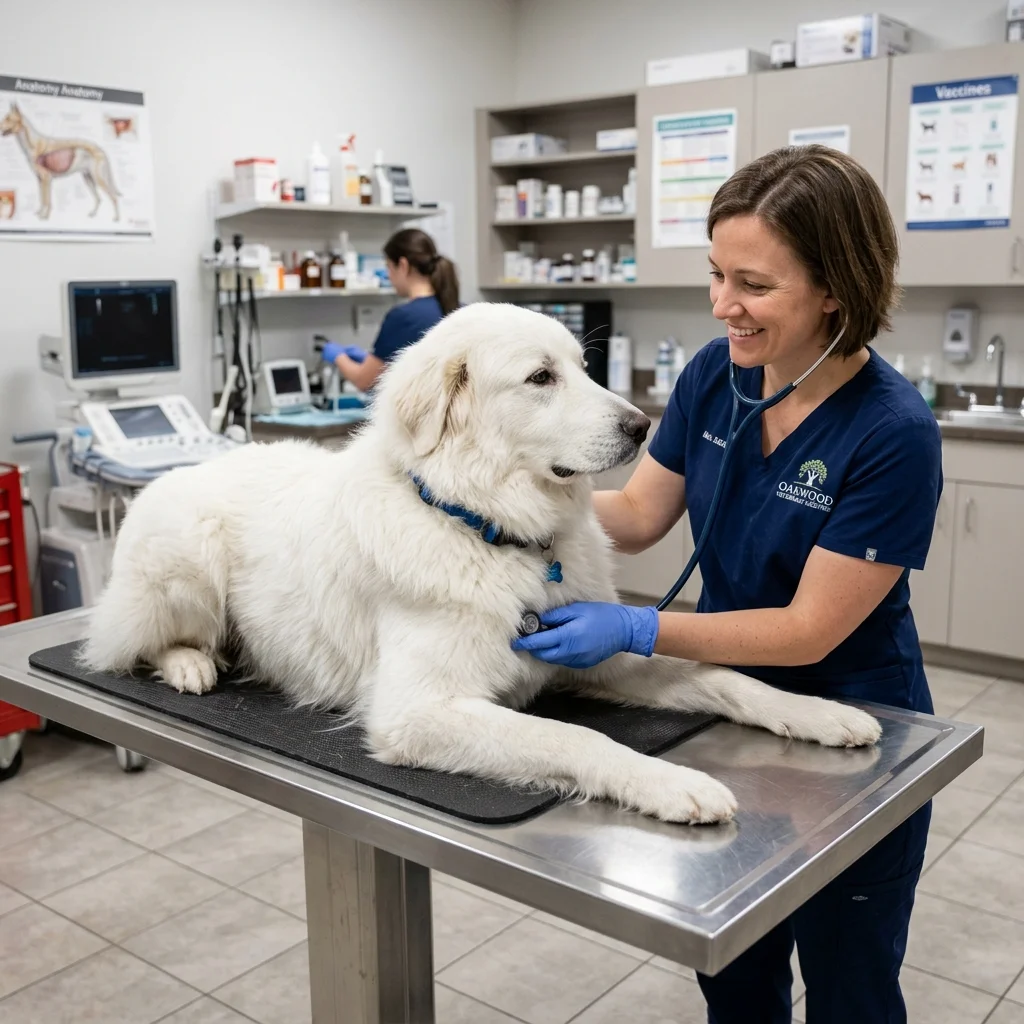
The 4-Point Field Check
LGDs are notoriously stoic and will often hide pain. If you suspect your dog is acting "off" after a meal or heavy exercise, perform this immediate 4-point check:
1. Non-Productive Retching
The classic sign. The dog stands with a roached (hunched) back, gagging, drooling heavily, and trying to throw up, but only white foam or nothing comes out.
2. Hard, Tympanic Abdomen
Feel the stomach just behind the ribs. It will feel tight, hard, and distended. If you thump it lightly with a finger, it may sound hollow like a drum (tympanic).
3. Extreme Restlessness
The dog cannot get comfortable. They will pace, lie down, immediately stand back up, and stare at their flanks in distress.
4. Pale Gums / Shock
Lift the lip. If the gums are pale white, grey, or blue, cardiovascular shock has set in. Press the gum; if the pink color takes longer than 2 seconds to return, they are crashing.
Risk Factors in LGDs
Veterinary epidemiology has identified several specific risk factors for GDV in giant breeds:
- Deep, Narrow Chests: Anatomy is the primary driver. There is physically more room in the abdominal cavity for the stomach to swing and twist.
- Feeding Practices: Feeding one massive meal a day, or dogs that "inhale" their food rapidly, swallow excess air (aerophagia).
- Elevated Feeders: Myth Buster: Older advice recommended elevated food bowls to prevent bloat. Modern studies (Glickman et al.) actually proved that elevated bowls increase the risk of GDV. Feed on the ground.
- Post-Meal Exercise: Allowing a dog to patrol aggressively, run, or roll on their back immediately after drinking a gallon of water or eating a heavy meal creates a "pendulum" effect that can trigger the twist.
- Stress: High-anxiety dogs, or dogs placed in stressful boarding/travel situations, have significantly higher GDV incidence.
Prophylactic Gastropexy (Stomach Tacking)
Because GDV is so prevalent in giant breeds, many owners opt for a prophylactic gastropexy. This is a surgical procedure where the outer layer of the stomach is permanently sutured (tacked) to the interior abdominal wall.
- Efficacy: It does not prevent "bloat" (the stomach can still fill with gas), but it almost entirely prevents the fatal volvulus (the twist), buying you time to get to a vet.
- Timing: This is almost exclusively performed simultaneously with a spay or neuter surgery between 18-24 months of age, since the dog is already under general anesthesia and the abdomen is accessible.
- Recovery: It adds about 30-45 minutes to the surgical time and requires a slightly longer incision and strict rest during recovery to ensure the tack heals firmly.
Emergency veterinary-directed care
If you arrive at the emergency clinic with a GDV case, the protocol is aggressive and rapid:
- Decompression: The vet will immediately pass a stomach tube down the esophagus, or puncture the stomach directly through the side with a large needle (trocarization) to vent the trapped gas.
- Fluid Resuscitation: Massive IV fluids are given to reverse cardiovascular shock.
- Surgery: Once stabilized, the dog is taken to surgery. The stomach is untwisted. The vet must visually inspect the stomach wall and spleen. If tissue has died (necrosis), those sections must be amputated. Finally, a gastropexy is performed to prevent it from happening again.
Mortality rates for GDV range from 15% to 33%, heavily dependent on how quickly the owner recognized the signs and transported the dog.
Prevention & Feeding Protocols
While GDV cannot be entirely prevented (except via prophylactic gastropexy), evidence-based feeding practices can significantly reduce the risk:
- Feed 2–3 smaller meals daily rather than one large meal. This reduces the volume of gas-producing material in the stomach at any one time.
- Feed on the ground. Despite decades of contrary advice, Glickman et al. (2000) demonstrated that elevated food bowls increase GDV risk in large breeds. Feed at ground level.
- Slow feeding devices: For dogs that inhale food, use slow-feeder bowls, puzzle feeders, or scatter feeding to reduce aerophagia (air swallowing).
- Enforce a 1-hour rest period after meals before allowing active patrol or exercise. In multi-dog systems, stagger feeding times to prevent competition-driven speed eating.
- Limit water gorging: Dogs returning from hot-weather patrol may drink enormous volumes rapidly. Provide water in controlled amounts rather than a full bucket.
- Avoid high-fat, high-citric-acid kibbles: Epidemiological data suggests these formulations produce more gastric gas.
- Reduce stress: Anxious, fearful, or kenneled dogs have higher GDV incidence. For LGDs, sudden changes in environment, boarding, or travel are significant risk factors.
The Gastropexy Decision
For any giant breed LGD, discuss prophylactic gastropexy with your veterinarian. The procedure adds ~$300–$600 when combined with spay/neuter surgery and can be performed laparoscopically (minimally invasive). Given that emergency GDV surgery costs $5,000–$10,000+ and carries 15–33% mortality, the prophylactic procedure is one of the highest-ROI veterinary investments available for giant breeds.
Glickman, L. T. et al. (2000). Non-dietary risk factors for gastric dilatation-volvulus in large and giant breed dogs. Journal of the American Veterinary Medical Association, 217(10), 1492–1499.
Glickman, L. T. et al. (2000). Incidence of gastric dilatation-volvulus among racing greyhounds. JAVMA.
Brockman, D. J. et al. (1995). Canine gastric dilatation/volvulus syndrome in a veterinary critical care unit: 295 cases. JAVMA, 207(4), 460–464.
Ward, M. P. et al. (2003). Benefits of prophylactic gastropexy for dogs at risk of gastric dilatation-volvulus. Preventive Veterinary Medicine.
Bell, J. S. (2014). Inherited and predisposing factors in the development of gastric dilatation-volvulus in dogs. Topics in Companion Animal Medicine.
Raghavan, M. et al. (2004). Diet-related risk factors for gastric dilatation-volvulus in dogs of high-risk breeds. JAAHA.
Hart, B. L. et al. (2020). Assisting Decision-Making on Age of Neutering for 35 Breeds of Dogs. Frontiers in Veterinary Science.