Because LGDs are massive, deep-chested working dogs, their physiological makeup fundamentally differs from standard dog breeds. Their lower body-surface-area-to-volume ratio and specific metabolic rates mean that standard mg/kg chemical dosing can be extremely dangerous. Furthermore, protecting these dogs from parasites without jeopardizing their breeding viability requires navigating conflicting global veterinary labels.
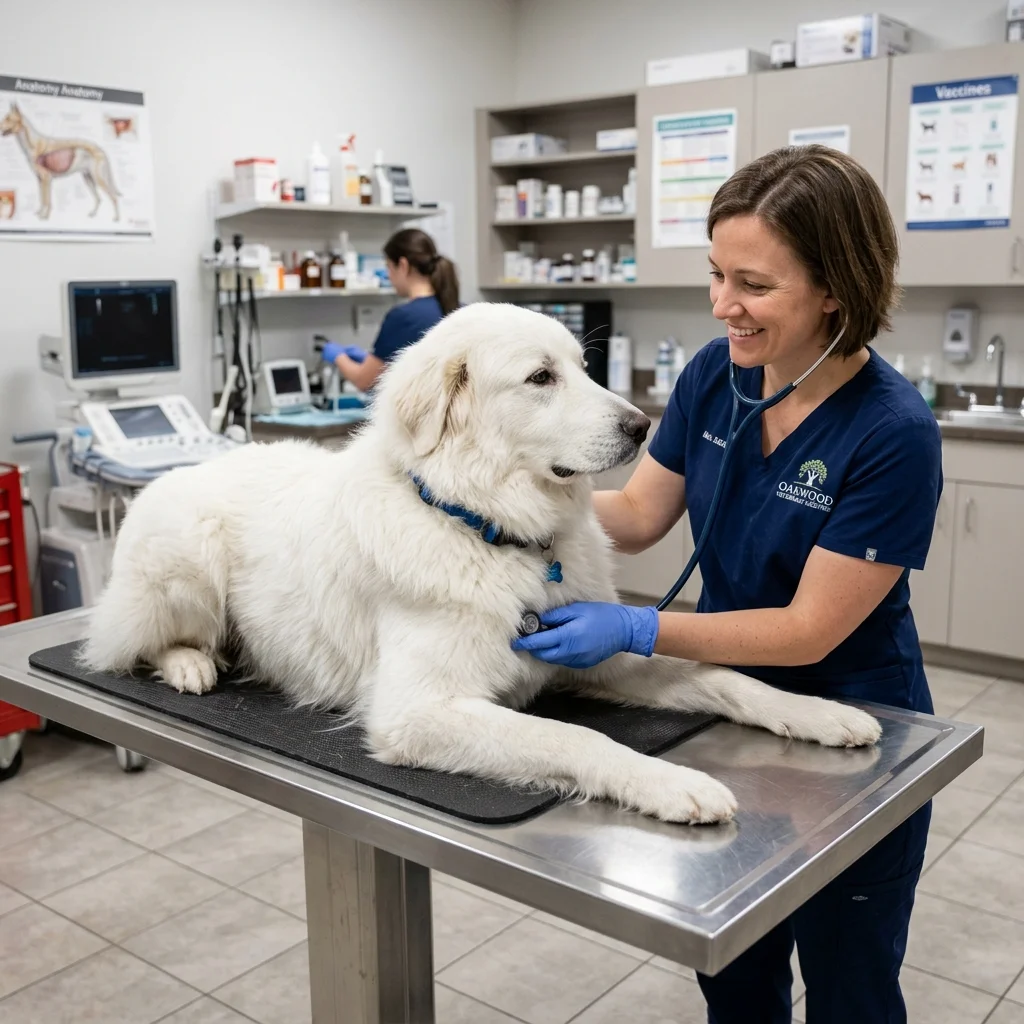
Giant Breed Anesthesia Risks
The most significant risk factor during any surgical procedure for a giant breed is an overdose of anesthesia. Standard dosages calculated strictly by body weight often fail to account for the unique metabolic composition of giant breeds.
Critical Anesthesia Protocols
- Lean Body Weight Dosing: Veterinarians should calculate anesthetic dosages based on the dog's lean body weight or body surface area, rather than their total scale weight, to prevent profound and prolonged sedation.
- Avoid Acepromazine: Many giant breed specialists and board-certified anesthesiologists strongly advise against the use of Acepromazine as a pre-anesthetic. In giant breeds, it can cause severe, prolonged hypotension (dangerously low blood pressure) and unpredictable sedation.
- Hypothermia Risk: Despite their thick coats, giant dogs lose core body heat rapidly while under anesthesia. The use of external heat sources (like "Bair Huggers") and extensive padding is required.
- Intubation & Bloat: Endotracheal intubation is critical to protect their airway. Furthermore, deep-chested breeds face an elevated risk of post-surgical Gastric Dilatation-Volvulus (GDV/Bloat) due to anesthetic agents slowing gastrointestinal motility.
Questions to ask your veterinarian before surgery:
- "How will you calculate the drug dosages for my dog's size? Will it be based on lean body mass?"
- Ask your veterinarian whether specific sedatives or anesthesia medications are appropriate for the individual dog’s health history, breed risk factors, and procedure.
- "What specific monitoring equipment will be used to track my dog's blood pressure continuously?"
Reproductive Safety: Flea & Tick Medications
Tick and flea prevention for working dogs, especially in endemic regions, should be selected with veterinary guidance based on the dog’s health, environment, reproductive status, and exposure risk. However, administering these to pregnant, lactating, or breeding LGDs carries immense risks of fetal deformity, abortion, and developmental delay.
Our analysis of regulatory data and clinical studies reveals significant discrepancies between U.S. FDA labels and European EMA labels regarding the safety of these chemicals during gestation.
| Drug Class & Name | Pregnancy / Breeding Safety | Clinical Findings & Post-Market Reports |
|---|---|---|
| Isoxazolines (Bravecto, NexGard, Simparica) |
Caution / Mixed Labels | While European (EMA) labels often extrapolate safety, US (FDA) labels note that safety has not been fully evaluated. Post-approval reports include fetal limb deformities, cleft palates, and abortions. Lab studies on rats showed reduced thymus weight and lymphoid atrophy in pups at low doses. |
| Avermectin / Milbemycin (Heartgard, Interceptor, Revolution) |
Generally tolerated under veterinary supervision | Extensive testing shows a wide safety margin for pregnant and breeding dogs at recommended doses. It successfully controls roundworms and fleas with no reported adverse reproductive effects. |
| Spinosyn (Trifexis, Comfortis) |
Not Safe | Considered unsafe due to reported fetal malformations. Use in breeding bitches requires extreme caution, and safety in breeding males has not been evaluated. |
| Pyrethroids (K9 Advantix, Vectra 3D) |
Veterinary Consult Req. | Rodent meta-analyses show that gestational and lactational exposure causes significant toxicity to the male reproductive system of F1 offspring (reducing sperm count/motility). Safety in pregnant dogs is not definitively established. |
| Phenylpyrazole (Fipronil / Frontline) |
Conflicting Data | While dog-specific topical tolerance studies claim safety, in-vivo studies in rats showed maternal toxicity, embryotoxicity, and significant teratogenic effects (cleft palate, heart hypoplasia) when administered orally. |
A Defensive Posture
Working dogs exposed to massive tick loads face real threats from vector-borne diseases. However, chemical intervention requires a highly defensive posture when dealing with breeding stock. Medication and anesthesia planning for breeding females should be discussed with a veterinarian, with attention to reproductive status, body condition, breed-related sensitivities, and overall health history.
1. AAHA (2020). Anesthesia and Monitoring Guidelines for Dogs and Cats. Lean bodyweight dosing, BSA vs mg/kg, dexmedetomidine ranges, BP thresholds.
2. Kangal Dog Club of America. Anesthesia Recommendations. Anesthesia planning for LGDs should be individualized by a veterinarian based on the dog’s body condition, health history, procedure, and medication risk factors.
3. Grasso, S. C., et al. (2015). "Hemodynamic influence of acepromazine or dexmedetomidine in isoflurane-anesthetized dogs." JAVMA. Ace group MAP dropped to 46 ± 8 mmHg.
4. Singh, M., et al. (2025). "Anaesthesia monitoring in ASA II dogs: dexmedetomidine vs acepromazine." Indian J Animal Health.
5. Sano, T., et al. (2003). "Clinical usefulness of propofol." J Vet Med Sci. Apnea in 87% (67/77 dogs).
6. Devito, F., et al. (2020). "Comparative study of propofol dosages based on lean body weight vs total body weight." Vet & Animal Sci.
7. MSD Veterinary Manual. "Gastric Dilation and Volvulus in Small Animals." GDV and anesthesia concerns should be managed by a veterinarian with monitoring and a care plan tailored to the dog’s condition, procedure, and risk factors.
8. European Public MRL Assessment Report for Fluralaner. Isoxazoline reproductive risks.
9. Zhang et al. (2021). "Pyrethroids Toxicity to Male Reproductive System." Frontiers in Endocrinology.